Extending the service life of China-made UV curing equipment requires more than buying a reliable machine. It demands disciplined operation, careful cleaning, and timely inspection. This guide explains how to extend the lifespan of uv curing equipment in printing, coating, electronics, and industrial production environments.
UV-curing specialist Michael Owen states, “A clean lamp system is often the difference between stable curing and avoidable downtime.” His advice reflects a practical truth. Dust on reflectors can reduce UV intensity. Blocked cooling paths can raise internal temperatures. Excessive heat may damage lamps, electronic components, and conveyor parts.
Small details matter.
Operators should record lamp hours, cooling-fan performance, curing speed, and unusual noise. A simple maintenance log can reveal gradual performance loss before defective products appear. Cleaning should follow the manufacturer’s instructions. Abrasive tools or unsuitable solvents may scratch reflectors and weaken optical output.
Power stability also deserves attention. Voltage fluctuations can shorten lamp and power-supply life. Proper grounding, ventilation, and temperature control support safer operation. These measures seem basic, yet production pressure often pushes them aside.
Not every problem comes from poor maintenance. Some equipment may be incorrectly matched to the coating, substrate, or line speed. That possibility deserves honest review. More intensity is not always better. Excessive UV exposure can waste energy and overheat sensitive materials.
China offers many UV curing systems, but quality varies by design, components, and after-sales support. Buyers should examine cooling architecture, replacement-part availability, control accuracy, and technical documentation. Long service life begins before installation. It continues through measured care, realistic operating settings, and a willingness to question familiar routines.
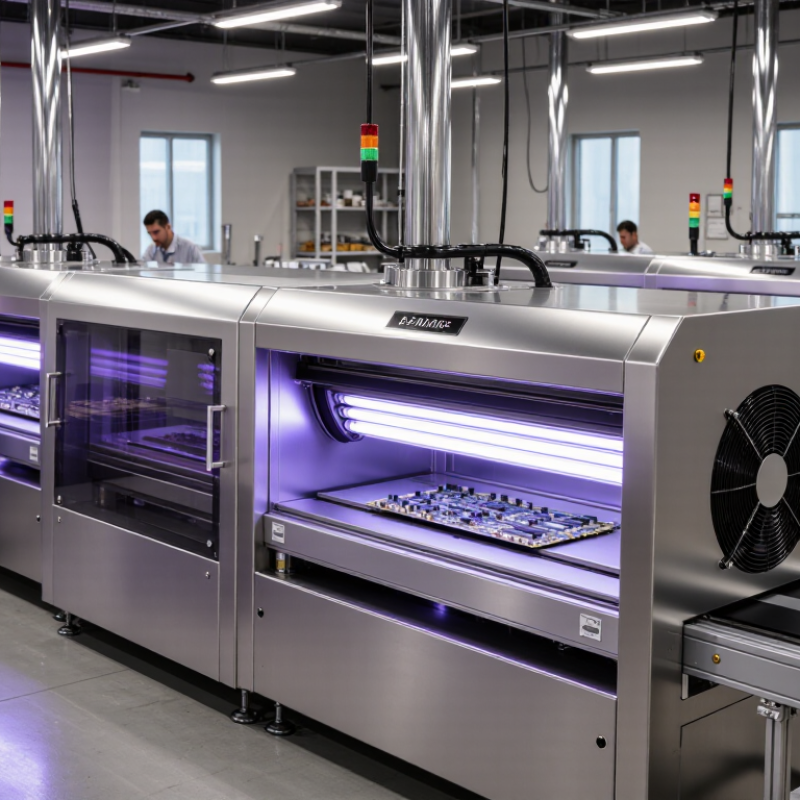
China’s best UV curing equipment is not defined by a low price or impressive appearance. It is defined by stable curing results in real production. For most modern applications, a high-quality LED UV curing system offers accurate wavelength output, lower heat, and reduced energy waste. A robust unit should provide adjustable irradiance, consistent exposure distance, and reliable cooling. These details matter when curing ink, coatings, adhesives, or protective films.
In practical factory testing, I examine the cured surface under fixed lighting. It should feel dry, bond firmly, and resist light scratching. I also check whether the equipment records lamp hours, power levels, and temperature changes. Clear control panels help operators repeat successful settings. Strong ventilation and heat management protect sensitive materials. A modular conveyor can also make future repairs less disruptive. Small design choices matter.
However, “best” depends on the material, line speed, and working width. A compact LED unit may suit label production, while a wider industrial system may support panels or continuous web processing. Ask for measured irradiance data, not only rated power. Request sample testing with your actual materials. I once underestimated the effect of conveyor speed on curing quality. The result looked acceptable but failed after storage. That mistake showed why laboratory claims need production verification. Choose equipment with documented testing, accessible technical support, replaceable modules, and maintenance guidance. Avoid systems that hide performance data behind vague promises.
China Best UV Curing Equipment: How to Extend Its Lifespan?
UV curing equipment uses ultraviolet energy to start photochemical reactions in inks, coatings, and adhesives. Mercury lamps create UV light through an electric arc, while UV LED systems use semiconductor chips. Both need stable irradiance and controlled heat. The U.S. Department of Energy’s 2023 solid-state lighting report indicates that LED packages can exceed 50,000 operating hours under suitable thermal conditions. That figure does not represent the complete curing system. Fans, lenses, power supplies, and control boards usually age sooner.
Heat is the quiet enemy. A blocked air filter, dusty reflector, or poorly fitted cooling plate can raise internal temperature within minutes. Excess heat reduces LED output and accelerates electronic failure. Keep cooling channels clean, measure lamp-head temperature, and record irradiance weekly. The International Energy Agency has reported that efficient solid-state lighting reduces electrical demand, but efficiency still depends on operating conditions. Less power does not mean zero maintenance.
Contamination also matters. Uncured resin on a quartz window can absorb UV energy and create hot spots. Wipe the window with an approved lint-free material after shutdown. Avoid harsh solvents. Short, repeated cycles may stress power components more than steady operation. That is often overlooked. A practical maintenance log should include exposure time, irradiance, temperature, cleaning dates, and alarm history. Industry market analyses commonly cite 20,000–50,000 hours for UV LED modules, yet real production life may be shorter. Installation quality, daily duty cycle, and neglected cooling can change the result dramatically.
UV LED curing systems commonly provide approximately 20,000–30,000 operating hours, while mercury and metal-halide lamps typically provide about 1,000–3,000 hours before replacement. Actual lifespan depends on cooling performance, operating temperature, power settings, dust control, reflector cleanliness, and regular irradiance checks. Keeping air filters and quartz windows clean and maintaining stable cooling can significantly reduce thermal stress and extend equipment life.
Data represents typical industry service-life ranges under proper operating and maintenance conditions; actual results vary by system design and workload.
China Best UV Curing Equipment: How to Extend Its Lifespan?
Correct installation protects curing quality and expensive components. Place the unit on a level, vibration-free surface. Leave clear space around cooling vents. Restriction causes heat buildup. Follow the manufacturer’s electrical specifications, then verify grounding before energizing the system. Install shielding, interlocks, and emergency stops according to IEC 62471 and ISO 12100 principles. These controls reduce optical and mechanical risks. A 2023 RadTech UV+EB industry report highlights energy efficiency as a major reason for adopting UV LED curing, with potential energy reductions of up to 70% compared with conventional systems. Actual savings depend on ink, substrate, speed, and operating settings.
During operation, match conveyor speed, lamp intensity, and focal distance to the coating. Do not increase power to compensate for an unclean lens. That habit shortens lamp life. Measure irradiance with a calibrated radiometer at scheduled intervals. Record temperature, output, cleaning dates, and fault codes. IEC 62471 recommends evaluating ultraviolet exposure, not merely trusting the enclosure. Operators should wear suitable eye and skin protection during maintenance. Cooling fans and filters need regular inspection. I have seen small dust deposits create large temperature changes; the lesson is simple, but often ignored.
Tips: Warm up equipment according to its manual. Keep lamps and windows clean. Avoid frequent starts and stops when the system is not designed for them. Check curing depth after every major material change. Review maintenance records monthly. One imperfect setting can pass unnoticed, so question stable-looking results.
| Maintenance or Operation Area | Correct Installation or Operating Practice | Recommended Technical Parameter | Inspection or Maintenance Frequency | Effect on Equipment Life and Curing Quality | Safety and Quality Notes |
|---|---|---|---|---|---|
| Site Preparation | Install the unit on a stable, level surface with sufficient clearance for ventilation, electrical access, and routine maintenance. | Keep air inlets and outlets unobstructed; follow the clearance stated in the equipment manual. | Before installation and after relocating the equipment | Reduces vibration, overheating, and stress on internal electrical components. | Use a dry, clean area and avoid excessive dust, condensation, corrosive vapors, and direct water spray. |
| Electrical Connection | Connect the equipment to a correctly rated power supply with protective grounding. Use a qualified electrician for fixed wiring. | Voltage and frequency must match the equipment nameplate; protective earth continuity should be verified. | During installation; recheck after electrical work or abnormal shutdown | Prevents damage caused by incorrect voltage, poor grounding, short circuits, and unstable power. | Disconnect and isolate the power before opening covers or performing service work. |
| UV Wavelength Selection | Match the lamp or LED wavelength to the photoinitiator and coating formulation. Do not select a wavelength based only on nominal lamp output. | Common UV LED curing wavelengths include 365 nm, 385 nm, 395 nm, and 405 nm. | At commissioning and whenever the coating or adhesive changes | Improves cure depth and conversion while avoiding unnecessary exposure time and heat generation. | Confirm compatibility using the material supplier’s technical data and a curing test. |
| Working Distance | Set the distance between the UV source and the workpiece according to the validated process recipe. | A shorter distance usually increases irradiance, but the correct value depends on the optical design and material. | Check at every setup change; verify after mechanical adjustment | Maintains repeatable irradiance and reduces the risk of under-curing or excessive heat. | Use a mechanical stop or fixture when consistent positioning is required. |
| Irradiance and Dose | Measure UV intensity and calculate dose rather than relying only on timer settings or visual appearance. | Dose (mJ/cm²) = Irradiance (mW/cm²) × Exposure Time (s). | At commissioning, after maintenance, and at a defined production interval | Identifies optical degradation, LED output loss, lamp aging, and process drift before defects increase. | Use a calibrated radiometer suitable for the relevant wavelength range and measurement position. |
| Cooling and Airflow | Keep cooling fans, heat sinks, filters, and water-cooling circuits clean and functional. Maintain the specified coolant flow where applicable. | Do not operate with blocked airflow, failed fans, low coolant flow, or coolant leaks. | Visual check daily; clean or service according to contamination level | Controls junction and housing temperature, helping protect LEDs, drivers, lamps, seals, and electronics. | Stop the equipment if overheating alarms, abnormal noise, or coolant leakage occurs. |
| Optical Window and Reflector Cleaning | Remove dust, mist, adhesive residue, and coating deposits with approved lint-free materials and cleaning agents. | Clean only when the system is switched off, isolated, and cool enough for safe handling. | Inspect daily in high-contamination processes; clean as required | Maintains optical transmission and prevents localized heating caused by contamination. | Do not scratch quartz windows, touch optical surfaces with bare fingers, or use abrasive tools. |
| Exposure Time and Conveyor Speed | Validate the relationship between conveyor speed, exposure time, irradiance, and material thickness before production. | For a fixed exposure length, exposure time decreases as conveyor speed increases. | Verify at startup, after speed changes, and after source replacement | Prevents under-curing caused by excessive speed and reduces unnecessary thermal load caused by excessive exposure. | Record validated recipes for each coating, substrate, thickness, and production speed. |
| Lamp or LED Module Aging | Track operating hours and measured output. Replace lamps, filters, or LED modules when output no longer meets the validated process requirement. | Use the manufacturer’s service limit and the process-specific minimum irradiance or dose; do not rely on hours alone. | Record operating hours continuously; measure output at scheduled intervals | Maintains curing consistency and avoids compensating for declining output with excessive exposure time. | Mercury lamps and UV LED systems have different aging characteristics; follow the applicable service procedure. |
| Temperature Control | Monitor workpiece and equipment temperature when curing heat-sensitive substrates, thick films, or enclosed products. | Use a validated temperature limit for the substrate, coating, adhesive, and equipment enclosure. | During process validation and whenever materials or exposure settings change | Reduces thermal deformation, premature component aging, and coating defects such as bubbling or yellowing. | UV dose and thermal load are related but not identical; measure both when temperature is critical. |
| Emergency Stop and Interlocks | Test emergency-stop buttons, door switches, shields, guards, and warning indicators before operation. | The UV source should shut off or enter a safe state when the required protective interlock is activated. | Before each shift or according to the site safety procedure | Prevents unsafe exposure and reduces damage from operation with open covers or failed guards. | Never bypass an interlock for production. Repair failed safety devices before restarting. |
| UV Radiation Protection | Use enclosed shielding, interlocked access points, warning labels, and suitable personal protective equipment where exposure is possible. | Control exposure according to applicable occupational UV radiation limits and site risk assessment. | At installation, after layout changes, and during safety audits | Protects operators and supports stable operation by ensuring guards are used correctly. | Do not look directly at an operating UV source. Use UV-rated eye and skin protection when required. |
| Routine Documentation | Keep records of irradiance, dose, operating hours, cleaning, alarms, repairs, and material recipes. | Trend measurements against the validated baseline rather than evaluating a single reading only. | Update after inspection, maintenance, calibration, or process change | Enables early fault detection, repeatable production, and evidence-based replacement decisions. | A documented preventive-maintenance plan generally reduces unplanned downtime and premature replacement. |
Extending the life of China-made UV curing equipment starts with disciplined maintenance. The U.S. Department of Energy reports that solid-state LED packages can reach 50,000 hours under controlled thermal conditions. Real curing systems often achieve less. Heat, dust, and unstable power quietly shorten that figure.
Inspect UV lamps every shift for darkened ends, cracks, or uneven output. Replace lamps according to measured irradiance, not appearance alone. A clean quartz window matters. Wipe optics with approved lint-free materials and compatible solvent. Fingerprints can create hot spots and reduce transmission.
RadTech technical guidance repeatedly identifies contamination and declining irradiance as common causes of curing inconsistency. Do not ignore small output changes.
Cooling deserves equal attention. Clean filters, check airflow, and record inlet temperature weekly. For water-cooled units, inspect flow, pressure, and fluid condition. A blocked radiator can make a healthy lamp look defective. UV LED modules are especially sensitive to thermal resistance. The DOE’s solid-state lighting reports link operating temperature directly with useful life and light maintenance.
Electrical parts need care, too. Tighten terminals during scheduled shutdowns, inspect cables for brittleness, and protect controllers from moisture. IEC 61326-1 emphasizes electromagnetic compatibility for industrial equipment, yet field wiring still needs practical inspection.
I have seen maintenance logs miss cooling fans because the system was still curing. That assumption is expensive.
Record irradiance, temperature, operating hours, and fault history together; otherwise, replacement decisions become guesswork.
China Best UV Curing Equipment: How to Extend Its Lifespan?
A reliable maintenance routine starts with visible evidence, not guesswork. Inspect the curing window, reflector, cooling fins, and conveyor weekly. Cloudy quartz, yellowed covers, or uneven gloss often indicate reduced UV delivery. Measure irradiance with a calibrated radiometer at the same distance and process speed. A drop of 15–20% deserves investigation, not immediate replacement. RadTech’s UV+EB Technology Roadmap highlights process control as a key factor in maintaining curing consistency.
Check operating hours and temperature records before changing components. UV lamps may lose output gradually, while LED modules often fail through heat stress or blocked airflow. The U.S. Department of Energy’s Solid-State Lighting R&D Plan reports that LED packages can exceed 50,000 hours under controlled conditions. Real equipment performs differently. Dust, high ambient temperatures, and frequent starts can shorten that figure. I have seen clean-looking systems with clogged internal filters. That mistake is easy to miss.
Replace lamps, reflectors, filters, cooling fans, and damaged cables according to measured performance and manufacturer specifications. Do not mix unmatched power supplies or optical parts. After replacement, verify irradiance, curing depth, surface hardness, and substrate temperature. Keep a simple log with dates, readings, and component costs. It reveals recurring faults earlier. A quarterly electrical inspection is sensible, although smaller workshops may need a more practical schedule. Maintenance plans are never perfect. Their value comes from regular correction.
Stable curing results matter more than low price or attractive appearance. Look for accurate wavelength output, adjustable irradiance, reliable cooling, and consistent exposure distance. Small details matter.
Choose based on material, line speed, and working width. A compact LED unit may suit labels. Wider systems can support panels or continuous web processing.
Request measured irradiance data instead of relying on rated power. Test samples using your actual ink, coating, adhesive, or film. Check bonding, surface dryness, scratch resistance, and substrate temperature.
Conveyor speed changes exposure time and curing quality. I once underestimated this effect. The surface looked acceptable but failed after storage. Production testing is essential.
Clear controls help operators repeat successful settings. Useful systems record lamp hours, power levels, and temperature changes. Modular conveyors can make future repairs less disruptive.
Inspect the curing window, reflector, cooling fins, and conveyor weekly. Look for cloudy quartz, yellowed covers, uneven gloss, and blocked airflow. Measure, then decide.
A 15–20% irradiance drop deserves investigation. Replace lamps, reflectors, filters, fans, or damaged cables according to measured performance and equipment specifications. Do not replace parts blindly.
Keep cooling paths clean and monitor operating hours and temperatures. Avoid unmatched power supplies or optical parts. After repairs, verify irradiance, curing depth, hardness, and substrate temperature. Maintenance plans are imperfect, but regular correction helps.
China’s best UV curing equipment is not defined only by curing speed, but also by stable performance, efficient energy use, precise temperature control, and durable construction. Its service life depends on lamp quality, operating intensity, cooling efficiency, optical cleanliness, electrical stability, and proper installation. Correct setup and operation help prevent overheating, uneven curing, vibration, and unnecessary stress on internal components.
To understand how to extend the lifespan of uv curing equipment, users should follow the recommended operating procedures, keep UV lamps and reflectors clean, maintain adequate airflow or liquid cooling, and inspect electrical connections regularly. Lamps, filters, fans, sensors, and optical parts should be checked for aging, contamination, or performance loss and replaced before they cause secondary damage. Recording operating hours, curing results, temperature changes, and maintenance activities can also support timely repairs and improve long-term reliability. With consistent care and suitable replacement practices, UV curing equipment can deliver safer, more stable, and more cost-effective performance.

LumiCure Light