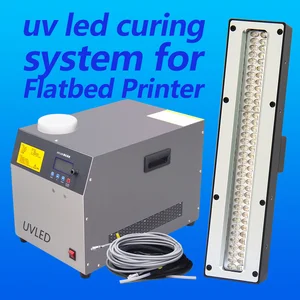
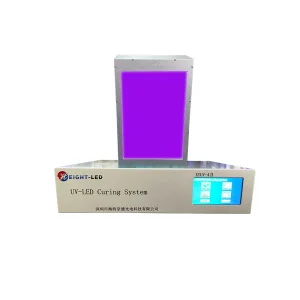
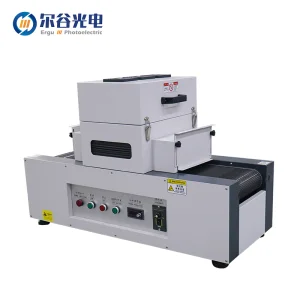
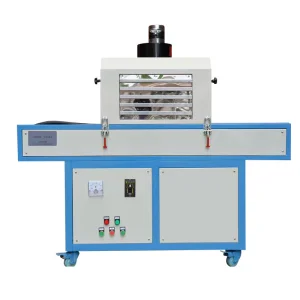
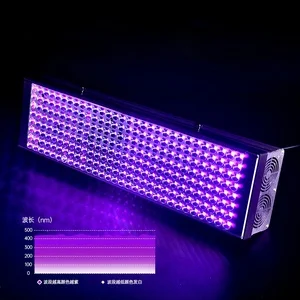
Explore our industrial-grade, energy-saving curing lights, fully customizable spot/flood arrays, and conveyor systems.
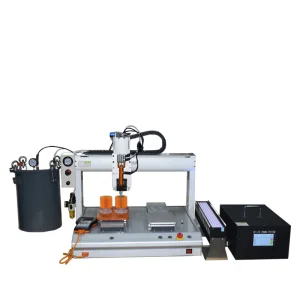
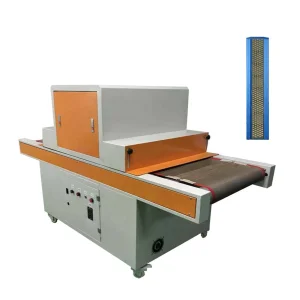
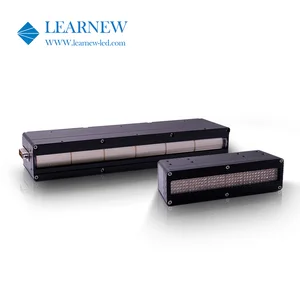
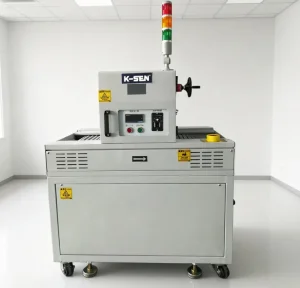
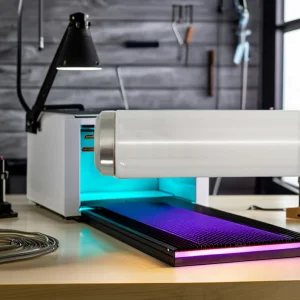
The global manufacturing ecosystem is experiencing a profound transition from traditional high-pressure mercury vapor lamps to solid-state UV LED adhesive curing systems. Across key manufacturing corridors in North America, Germany, Japan, and emerging tech hubs in Southeast Asia, industrial OEMs are rewriting their processing protocols to mandate UV LED systems. This shift is not merely driven by environmental mandates—such as the Minamata Convention on Mercury and EU RoHS compliance—but is primarily centered on operational precision, thermal control, and process stability.
Conventional mercury arc systems radiate broad-spectrum energy, releasing excessive infrared (IR) heat. This thermal byproduct warps thin plastic substrates, damages delicate semiconductor wafers, and compromises precise optical alignments in multi-lens camera assemblies. UV LED systems, emitting narrow-band radiation (typically centered around 365nm, 385nm, 395nm, or 405nm), focus energy precisely where the photoinitiators require it, eliminating thermal strain. Furthermore, the instant-on/off capability eliminates warm-up cycles, which reduces electricity consumption by up to 70% and enables seamlessly synchronized manufacturing lines.
Monochromatic spectral output at target wavelengths (e.g., 365nm or 395nm) ensures localized polymerization without unnecessary exposure to degrading thermal wavelengths.
Ultra-compact module configurations allow seamless mechanical integration on multi-axis Cartesian robots and high-speed rotary indexers.
Industrial UV LED systems use high-density copper substrates and micro-channel liquid coolers or advanced heat sinks to maintain stable junction temperatures.
Empowering Global Smart Factories with Custom Engineered UV Photopolymerization Systems
Dongguan LumiCure Light Co., Ltd. is a professional China UV LED curing lamp manufacturer specializing in the research, development, production, and supply of industrial UV curing systems and customized UV LED solutions. With a strong focus on innovation, quality, and customer satisfaction, LumiCure has become a trusted partner for manufacturers worldwide seeking efficient and reliable curing technologies.
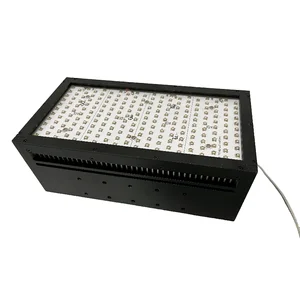
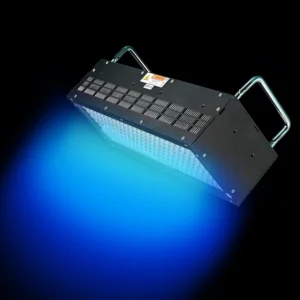
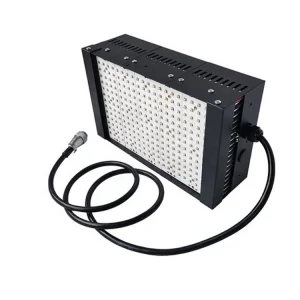
Our comprehensive product range includes UV LED curing lamps, UV LED spot curing systems, flood curing lamps, conveyor UV curing machines, UV LED modules, printing curing systems, adhesive curing equipment, and customized industrial UV solutions. These systems are widely applied in packaging, commercial printing, electronics assembly, semiconductor packaging, optical bonding, automotive manufacturing, medical devices, 3D printing, and various precision industrial processes.
Backed by an experienced engineering team and advanced manufacturing facilities, LumiCure is committed to developing energy-saving and environmentally friendly UV curing technologies. Our products feature high curing efficiency, precise wavelength output, long service life, low maintenance requirements, and intelligent control capabilities, helping customers improve productivity while reducing operating costs.
Quality remains the foundation of our business. Every product undergoes rigorous testing and strict quality control procedures throughout the manufacturing process to ensure consistent performance and reliability. We also provide comprehensive OEM and ODM services, enabling customers to customize products according to their specific technical and application requirements. Serving clients across Europe, North America, Asia, the Middle East, and other global markets, Dongguan LumiCure Light Co., Ltd. continues to deliver innovative UV LED curing solutions that support sustainable and efficient industrial manufacturing.
Why do global medical device OEMs and automotive tier-1 suppliers source from China-based manufacturers like LumiCure? The answer lies in the concentrated localization of the supply chain in Dongguan and the Pearl River Delta. This proximity allows for the procurement of optoelectronic components, advanced aluminum alloys, driver circuit assemblies, and thermal management units within a tight radius, resulting in significant logistical efficiencies.
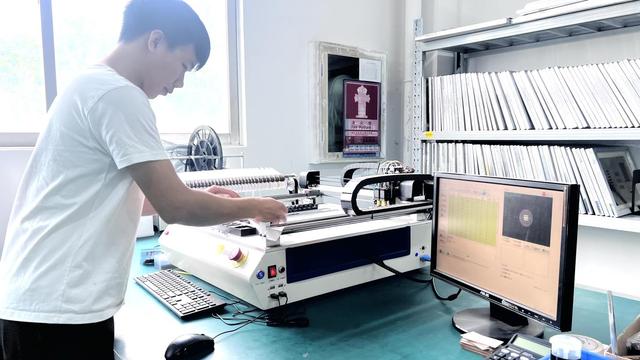
This geographic concentration shortens the typical development cycle for custom solutions. While Western equipment integrators may require months to engineer a bespoke flood curing array, Chinese engineering firms can design, simulate, build, and test a functional prototype within a fraction of that time. Advanced precision machinery and automated SMT placement machines allow us to produce high-intensity curing systems at scale without compromising quality control.
Furthermore, this localization translates into cost efficiencies. By optimizing manufacturing workflows and raw material procurement, LumiCure offers competitive pricing on highly technical equipment, such as water-cooled, high-intensity 395nm systems, while maintaining Western-grade quality certifications (CE, RoHS, REACH).
Analyzing how different industries configure wavelengths and footprints to maximize curing speed and yield.
Curing adhesives in catheters, syringes, and medical filters requires certified biosafety standards (ISO 10993). Precision spot curing systems operating at 365nm provide rapid bonding with low heat emission, ensuring plastic housings do not warp, maintaining sterile integrity.
Modern vehicles rely on ADAS cameras, LiDAR arrays, and radar sensors. Active alignment techniques require sub-micron precision during gluing. High-intensity spot UV systems cure adhesives in milliseconds, locking optics in place before mechanical drift can occur.
Laminating optical displays, touch screens, and military-grade instrumentation panels requires index-matched adhesives (LOCA). This necessitates uniform flood curing systems at 395nm or 405nm to prevent shadows, bubbles, and localized stress cracks.
A reference guide for plant managers and engineering leads during system selection.
| Wavelength (nm) | Common Application | Cooling Mechanism | Recommended Irradiance (W/cm²) | Curing Time (seconds) |
|---|---|---|---|---|
| 365nm | Delicate plastics bonding, glass-to-metal bonding, optics alignment | Air-Cooled / Water-Cooled | 2.5 - 12.0 W/cm² | 0.5 - 2.5s |
| 385nm | Thick layer encapsulation, conformal coatings, PCB protection | Water-Cooled Array | 4.0 - 15.0 W/cm² | 1.0 - 3.0s |
| 395nm | Automotive structural adhesive bonding, high-speed conveyor lines | Water-Cooled / Air-Cooled | 6.0 - 20.0 W/cm² | 0.3 - 2.0s |
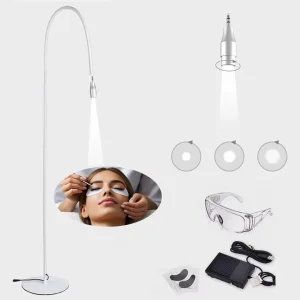
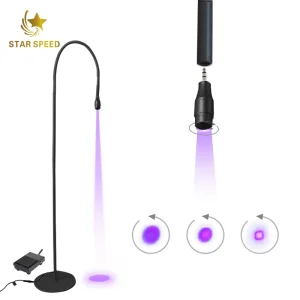
| 405nm | Cosmetic adhesive curing (eyelash extensions), deep resin curing | Air-Cooled / Handheld | 0.5 - 5.0 W/cm² | 0.3 - 1.5s |
LED Life Hours
Optical Intensity
Energy Savings
Ultra-Fast Curing
Understanding the technological developments shaping the future of global assembly lines.
The UV LED curing market is advancing rapidly. One of the most promising trends is the development of multi-wavelength arrays. In the past, engineers had to choose a single peak wavelength, but modern systems combine 365nm and 395nm LEDs in a single module. This design allows for simultaneous activation of surface and deep-fill photoinitiators, which helps reduce oxygen inhibition effects and improves surface tack-free properties.
Another major trend is the integration of Industry 4.0 diagnostics. Curing modules are no longer simple light sources; they are intelligent peripherals. Modern units feature integrated irradiance feedback sensors, junction temperature monitors, and real-time degradation diagnostics connected to factory PLCs via Modbus or EtherNet/IP. This setup allows for predictable maintenance cycles, reducing unplanned downtime in high-volume automotive and electronics assembly plants.
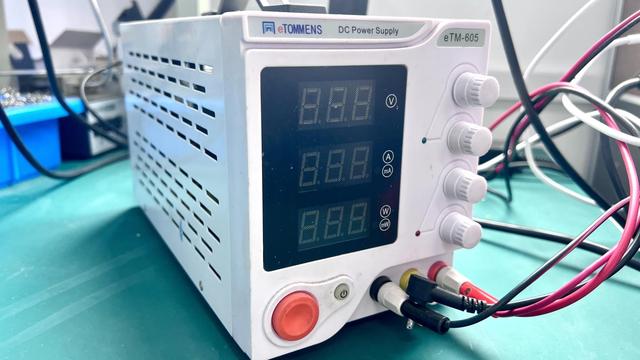
A look inside LumiCure's high-tech production bays and automated testing benches.


Considerations for industrial buyers when selecting system suppliers.
Industrial buyers must evaluate several critical parameters when sourcing UV LED equipment:
Expert insights on the engineering, design, and applications of industrial UV LED curing systems.
Explore our heavy-duty industrial systems, high-power conveyors, and specialty application lamps.
 LumiCure Light