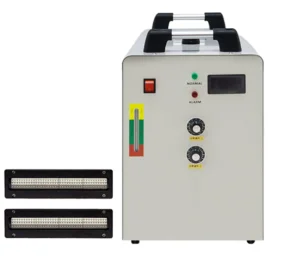
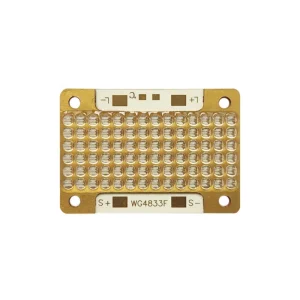
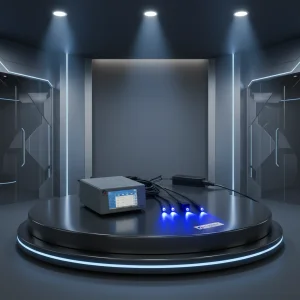
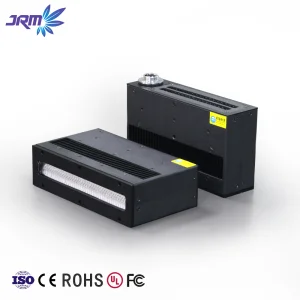
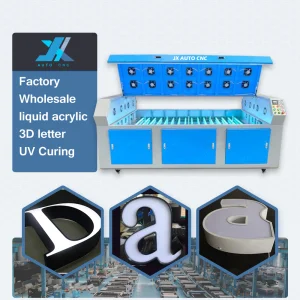
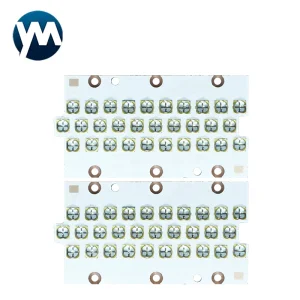
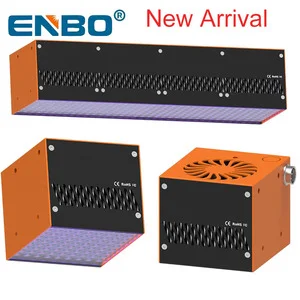
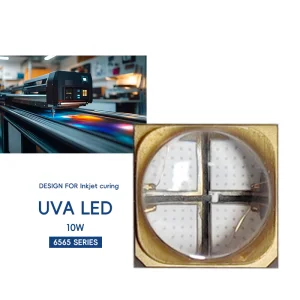
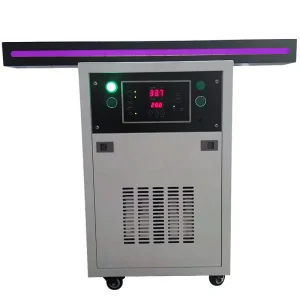
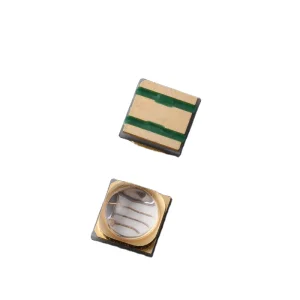
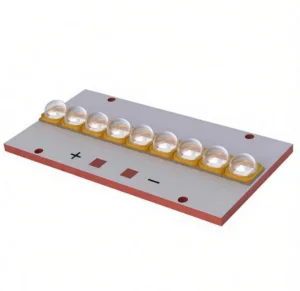
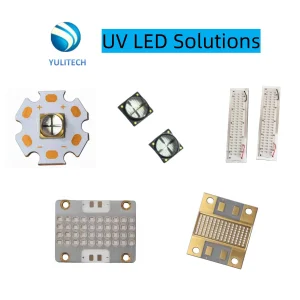
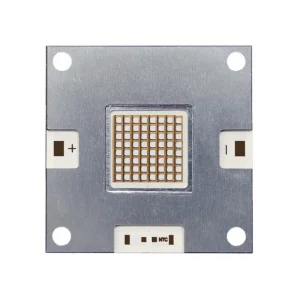
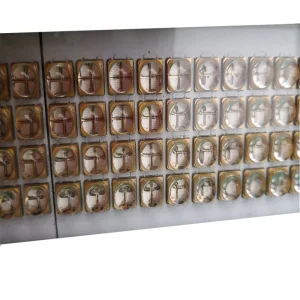
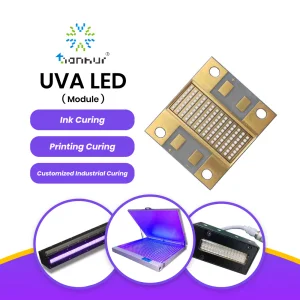
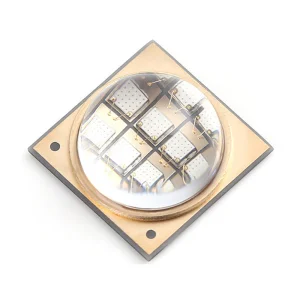
Explore our primary array of high-power curing modules and systems designed for optimal thermal stability and fast-drying applications.
Years of R&D Focus
Peak Radiant Irradiance
Exporting Destinations
Module Lifespan
As standard high-pressure mercury vapor lamps face global environmental bans and strict regulatory phase-outs under the Minamata Convention, solid-state UV LED industrial curing modules have transitioned from an alternative technology to a mandatory industrial benchmark. For modern high-speed printing, electronics packaging, optical coating, and precision manufacturing, choosing a reliable, technologically advanced UV LED industrial curing module exporter is paramount to securing production continuity, energy efficiency, and high product yields.
Dongguan LumiCure Light Co., Ltd. stands as a professional China UV LED curing lamp manufacturer specializing in the research, development, production, and supply of industrial UV curing systems and customized UV LED solutions. With a strong focus on innovation, quality, and customer satisfaction, LumiCure has become a trusted partner for manufacturers worldwide seeking efficient and reliable curing technologies.
By leveraging micro-optics simulation, high-density copper-base packaging (COB), and advanced thermal management, our industrial solutions achieve peak irradiance outputs exceeding 20 W/cm² across vital spectral ranges, including 365nm, 385nm, 395nm, and 405nm. We address the core pain points of machinery integrators and global buyers: wavelength consistency, reliable cooling systems, long-term degradation resistance, and modular system compatibility.
Exploring the structural advantages, raw material integration, and high-performance engineering that make China the hub of global UV curing supplies.
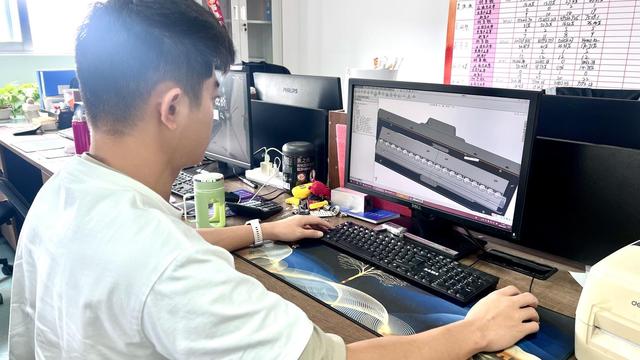
From epitaxial sapphire substrate processing and high-power SMD/COB packaging to precise optical lens molding and aluminum extrusion heat sinks, the localization of materials in Guangdong allows us to control costs and reduce prototyping lead times by over 45% compared to Western competitors.
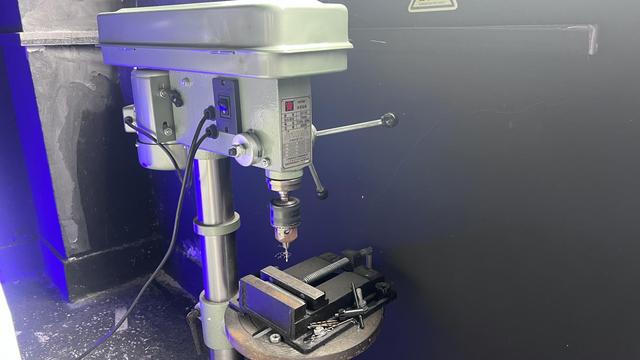
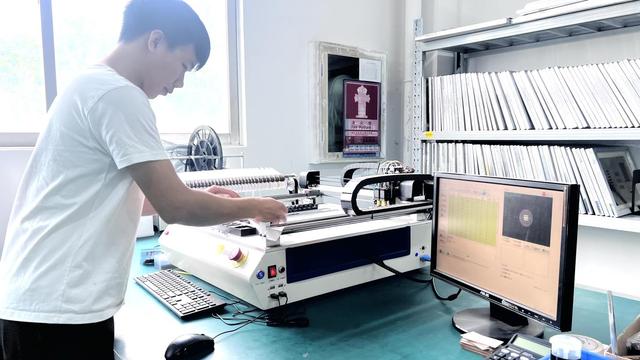
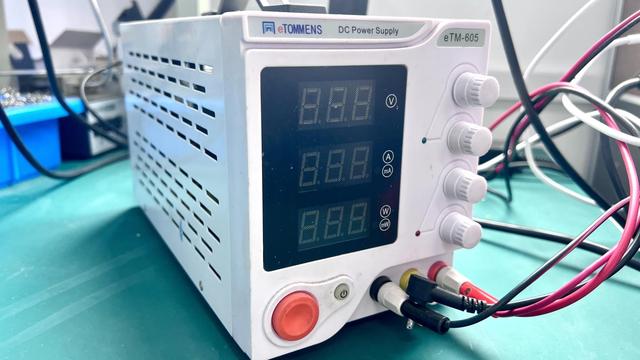
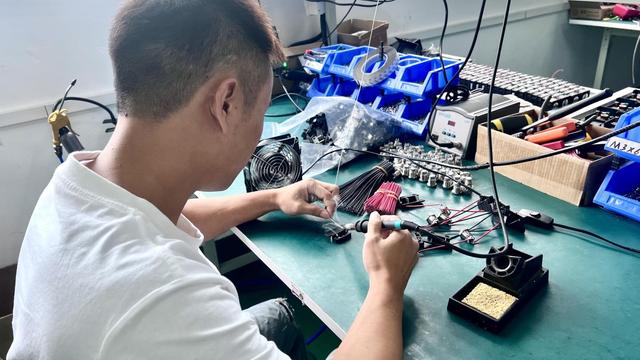
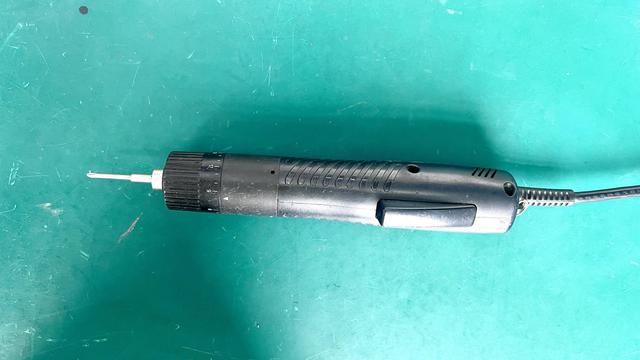
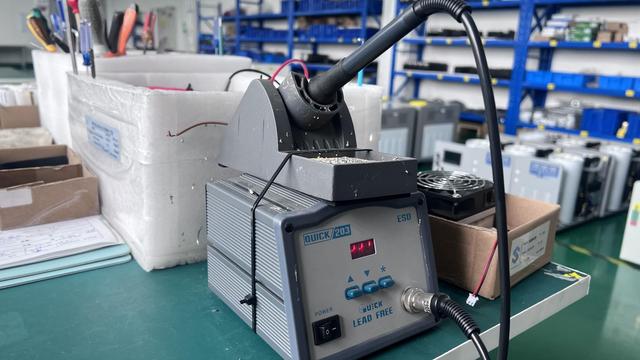
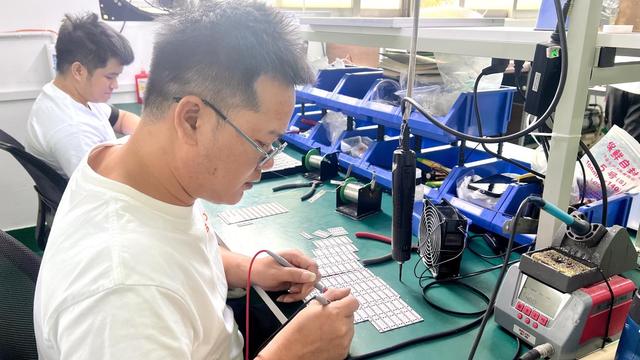
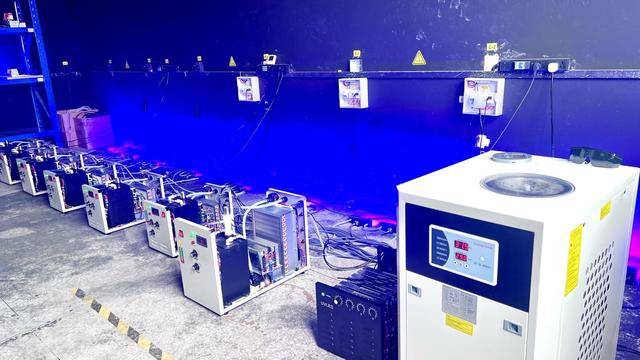
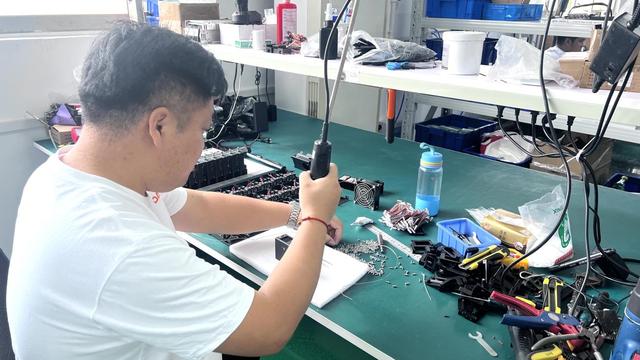
Every industrial module undergoes 72 hours of continuous aging tests, thermal imaging tests under full load, and optical irradiance mapping. Our facility holds ISO9001 certification, and our products carry CE, RoHS, and FCC compliance marks to facilitate seamless custom clearances for importers.
No industrial machine is identical. We specialize in custom-engineered copper-clad PCBs, specialized beam-angle lenses, custom housing profiles, and multi-wavelength hybrid integrations (e.g., 365nm + 395nm on a single module) to meet the unique chemical chemistry of specialized inks.
Achieving uniform polymerization without surface wrinkles or uncured bottom layers requires deep mechanical, optical, and thermal integration. The core performance of a UV LED module is determined by three variables:
Bare COB chips project a Lambertian light distribution (120° beam angle). In fast-drying printing or deep varnish curing, we use precision optical quartz or high-purity silicone lenses to concentrate light into narrow angles (15°, 30°, 60°), boosting peak irradiance by up to 300%.
Although UV LEDs do not emit infrared heat, the junction temperature of the LED chip must remain below 80°C to prevent output degradation. We utilize high-power water-cooled plates or double-ball bearing fan assemblies mounted to pure copper PCBs (thermal conductivity > 400 W/mK).
Industrial PLC systems require real-time monitoring. Our driving arrays support digital PWM dimming, over-temperature protection, loop monitoring, and feedback signals that interface with main console networks for smart factory integration.
From roll-to-roll label printing to aerospace bonding, discover how our modules adapt to high-volume industrial tasks.
High-speed offset printing presses running at 150m/min demand immediate ink polymerization. Conventional mercury lamps generate excessive heat, causing thin plastic films or paperboards to warp, stretch, or catch fire. Our custom-designed water-cooled 395nm UV LED arrays deliver high-density energy directly to the ink layer without emitting infrared heat. This technology is vital for pharmaceutical, cosmetic, and food-grade packaging labels, where fast, clean drying is essential.
For smart devices, camera modules, and semi-conductor assemblies, curing adhesives must occur with minimal thermal expansion to protect micro-components. Spot-curing and flood-curing UV systems operating at 365nm are critical here. Optical bonding of touchscreens, encapsulation of CMOS sensors, and reinforce-bonding of wire harnesses utilize our fan-cooled 365nm spot modules to cure UV-epoxies in under 2 seconds.
Applying scratch-resistant varnishes on wood panels or anti-corrosion lacquers on auto parts requires continuous, wide-area curing. Conveyor-style UV LED modules, built with heavy-duty structural frames, provide long-term continuous curing. By pairing specialized 395nm/405nm modules, coatings achieve high cross-linking density, translating to superior hardness, solvent resistance, and surface finish.
Our product range includes UV LED curing lamps, UV LED spot curing systems, flood curing lamps, conveyor UV curing machines, UV LED modules, printing curing systems, adhesive curing equipment, and customized industrial UV solutions. These products are widely applied in printing, electronics assembly, semiconductor packaging, optical bonding, automotive manufacturing, medical devices, 3D printing, and various precision industrial processes.
Backed by an experienced engineering team and advanced manufacturing facilities, LumiCure is committed to developing energy-saving and environmentally friendly UV curing technologies. Our products feature high curing efficiency, precise wavelength output, long service life, low maintenance requirements, and intelligent control capabilities, helping customers improve productivity while reducing operating costs.
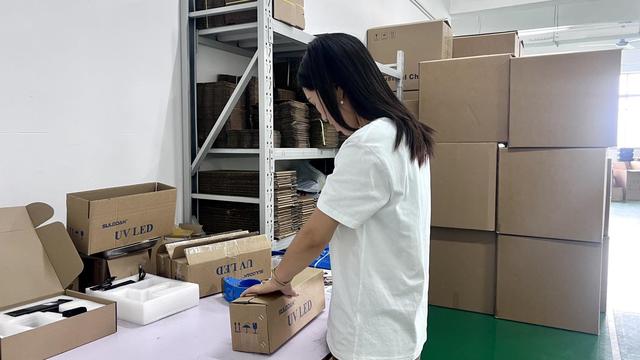
Quality remains the foundation of our business. Every product undergoes rigorous testing and strict quality control procedures throughout the manufacturing process to ensure consistent performance and reliability. We also provide comprehensive OEM and ODM services, enabling customers to customize products according to their specific technical and application requirements.
Serving clients across Europe, North America, Asia, the Middle East, and other global markets, Dongguan LumiCure Light Co., Ltd. continues to deliver innovative UV LED curing solutions that support sustainable and efficient industrial manufacturing.
Purchasing high-power industrial equipment requires verification of several key specifications to ensure the modules interface properly with host machinery. Consider the following criteria when finalizing your technical requirements sheet:
Get answers to critical technical and sourcing questions regarding industrial UV LED modules.
Explore our complete catalog of industrial spot curing modules, custom COB panels, and high-radiant-power solutions.
 LumiCure Light