What Are the Latest Trends in UV LED Curing Technology?

Time:2026-10-19 Author:Oliver
0%

What are the latest trends in uv led curing technology? The answer reaches beyond brighter lamps and faster production lines. Modern systems are becoming more intelligent, energy-efficient, compact, and adaptable. Manufacturers now focus on precise irradiance, controlled wavelengths, and consistent curing across complex surfaces.

Yung Shin, founder of Phoseon Technology and a recognized UV LED industry expert, has stated, “UV LED curing is a process technology, not simply a lamp replacement.” This perspective remains important. Successful adoption depends on more than installing a new light source. It requires matching wavelength, dose, intensity, cooling, optics, inks, coatings, and production speed.

Recent developments include higher-power arrays, improved thermal management, and air-cooled designs for smaller equipment. Closed-loop monitoring is also gaining attention. Sensors can track irradiance and temperature during production, reducing unnoticed curing variations. Some systems connect with factory software, supporting traceability and predictive maintenance.

Manufacturers are also exploring multiple wavelengths. This approach can improve adhesion on demanding materials, including plastics, electronics, labels, and heat-sensitive substrates. UV LED curing is expanding in inkjet printing, industrial coating, adhesive bonding, and additive manufacturing.

The progress is convincing, but not perfect. Higher intensity does not automatically produce better results. Shadowed areas, oxygen inhibition, surface contamination, and unsuitable photoinitiators can still create defects. Real-world testing remains essential.

This article examines what are the latest trends in uv led curing technology, while separating measurable advances from attractive marketing claims. It considers performance, energy use, reliability, safety, and application-specific limitations. The most useful trend may be practical integration, not maximum power alone.
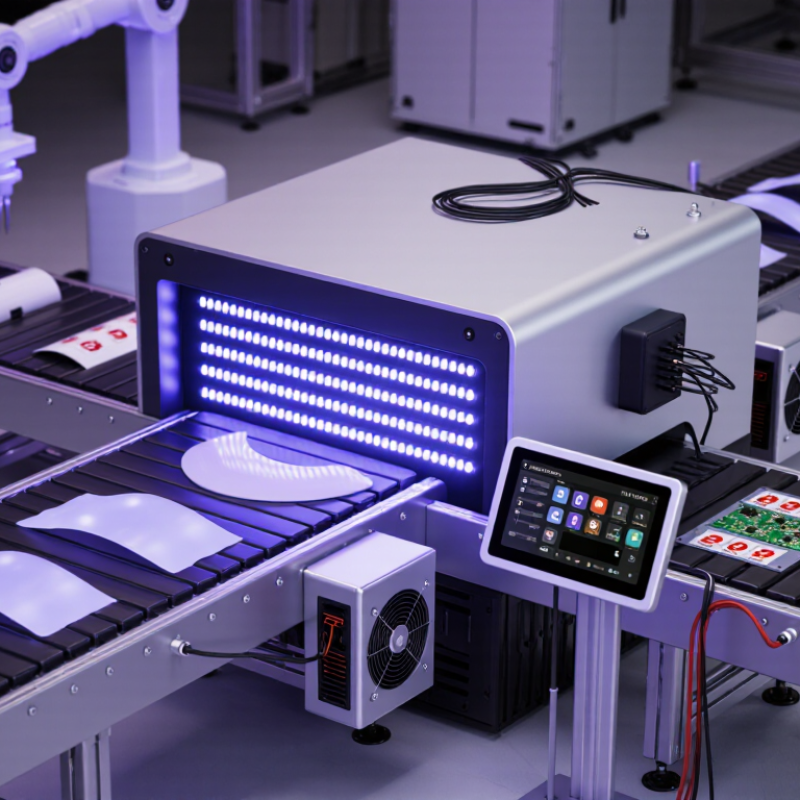
What Are the Latest Trends in UV LED Curing Technology?

UV LED Curing Technology: Definition and Operating Principles

UV LED curing technology uses ultraviolet light to harden coatings, inks, adhesives, and resins. Unlike traditional arc lamps, UV LED systems generate light through semiconductor chips. These chips commonly emit UVA wavelengths between 365 and 405 nanometers. A photoinitiator absorbs the light and forms reactive species. Those species connect liquid molecules into a solid polymer network.

The operating principle is precise but not complicated. Irradiance describes light intensity at the curing surface. Dose combines irradiance with exposure time. A moving conveyor, for example, changes the dose when speed increases. The material must also match the LED wavelength. If absorption is weak, the surface may appear cured while deeper layers remain soft. Not always obvious.

Recent systems use improved optical control, active cooling, and real-time dose monitoring. Air-cooled designs suit moderate workloads, while liquid cooling supports higher power density. Multiple wavelengths can improve curing through thicker or more heavily pigmented materials. Automated sensors now track irradiance, temperature, conveyor speed, and lamp aging. This creates better process records and reduces avoidable rework.

From practical testing, uniform distance matters more than many operators expect. A few millimeters can change the delivered dose across a wide workpiece. Dust on a quartz window can also reduce output gradually. The technology is efficient, but efficiency is not automatic. Formula design, surface geometry, oxygen exposure, and maintenance still determine the final result. Some curing failures remain difficult to diagnose, especially when a material’s chemistry is poorly documented.

What Are the Latest Trends in UV LED Curing Technology?

UV LED curing uses ultraviolet radiation to initiate photopolymerization in inks, coatings, adhesives, and resins.

The chart compares common UV LED curing wavelengths with their calculated photon energy. Photon energy is determined by the relationship E = 1240 / λ, where E is measured in electronvolts and λ is the wavelength in nanometers. Shorter wavelengths provide higher-energy photons, while longer wavelengths generally offer deeper penetration and improved compatibility with selected photoinitiators. Current technology trends include wavelength optimization, multi-wavelength curing, lower heat input, and more efficient energy use.

Photon-energy values are calculated from the physical relationship E = hc/λ and are independent of any company or brand.

Key Advances in UV LED Wavelengths, Power, and Energy Efficiency

What Are the Latest Trends in UV LED Curing Technology?

Key Advances in UV LED Wavelengths, Power, and Energy Efficiency

UV LED curing is moving toward more precise wavelength control. Common systems now use 365, 385, 395, or 405 nanometers. The correct choice depends on the photoinitiator and material thickness. A matched wavelength can improve surface cure and reduce tackiness. It can also lower unnecessary energy use.

Higher irradiance is another major development. Modern arrays can deliver stronger output over smaller curing areas. However, power alone does not prove better performance. Curing dose, measured in joules per square centimeter, still matters.

Distance, exposure time, and line speed must remain balanced. A small gap change can affect the final result.

Thermal management is becoming more important. Efficient heat sinks and liquid cooling help maintain stable LED output. Temperature sensors can reveal problems before defects appear. Energy savings are often significant because UV LEDs produce less unwanted heat than traditional sources. Still, efficiency claims need independent testing under real production conditions.

One weak point remains. Complex surfaces may receive uneven light, especially around corners and recessed areas. Reflective fixtures and multiple wavelengths can help, but they increase system cost.

Operators should record irradiance and dose regularly, rather than relying only on appearance. A cured surface may look perfect while its deeper layers remain under-cured.

Emerging Applications Across Manufacturing and Industrial Processes

UV LED curing is moving beyond coatings and inks into tightly controlled manufacturing cells. In electronics assembly, focused ultraviolet light cures adhesives around sensors, displays, and miniature connectors. This localized energy reduces heat exposure near plastics and delicate components. Production teams can trigger curing instantly, instead of waiting for thermal ovens to stabilize. In factory trials, the most useful improvement is process visibility. Sensors record irradiance, exposure time, and lamp temperature during each cycle. These records help technicians identify a weak optical path before defects spread. Still, curing speed alone does not guarantee bond quality. Surface chemistry, gap size, and shadowed areas remain decisive.

Automotive and mobility manufacturing is testing UV curing for protective coatings, battery-related components, and interior assemblies. Robotic systems can follow curved surfaces more consistently than manual lamps. Multiple wavelengths are becoming practical when one formulation needs staged curing. This matters for thick films and complex geometries. Industrial printing is another active area. UV LED systems support rapid decoration of metal panels, glass, labels, and engineered wood. Lower radiant heat can protect heat-sensitive substrates while reducing waiting space on the factory floor. However, pigments and fillers may block ultraviolet penetration. A glossy surface can look finished while remaining soft underneath.

Waterborne formulations, recyclable materials, and compact production lines are pushing further development. Engineers are combining cameras, dosimeters, and feedback controls to adjust exposure during operation. The approach is promising, but calibration practices vary widely. That inconsistency deserves more attention. Reliable deployment requires documented testing, replacement schedules, shielding, and worker training. Maintenance is often underestimated. Dust on a window can reduce delivered energy and create uneven curing. Manufacturers should validate every material stack under real line conditions, not only in laboratory samples. Small process changes can alter results.

Smart Controls, Automation, and Process Monitoring Innovations

Smart controls are moving UV LED curing from a fixed exposure step toward a measurable production system. MarketsandMarkets estimates the global UV LED market will grow from about USD 1.1 billion in 2024 to USD 1.8 billion by 2029. This expansion is encouraging manufacturers to connect curing units with programmable logic controllers, sensors, and factory data platforms. Operators can adjust irradiance, conveyor speed, and exposure time from a central interface. Recipe locking also reduces accidental changes between production batches.

Automation is becoming more practical on mixed-material lines. A sensor can detect substrate position before curing begins. Another can monitor temperature near heat-sensitive components. Process software then records the lamp output, line speed, and alarm history.

The Smithers report The Future of UV LED Curing to 2028 highlights process control and equipment integration as important growth factors. These systems support traceability without requiring an operator to write every reading manually.

Less paperwork.

Real-time monitoring, however, is not automatically reliable. A clean-looking dashboard may hide a contaminated optical window or a poorly calibrated sensor. Experienced technicians still need reference tests, dose verification, and regular maintenance. Data should trigger investigation, not replace judgment. Some factories also collect more information than they can interpret, creating expensive digital noise. The better approach is selective monitoring: measure the variables that influence cure quality, connect them to clear limits, and review abnormal trends before defects multiply.

Safety, Sustainability, and Future Development Trends

UV LED curing is moving beyond simple energy savings. Modern systems commonly use UVA wavelengths around 365 to 405 nanometres. They cure coatings, inks, and adhesives with less heat than many traditional lamps. This helps protect plastic parts, thin films, and temperature-sensitive components.

Safety remains essential. UV light can damage eyes and skin, even when exposure feels harmless. Enclosed curing chambers, interlocked doors, shielding, and measured irradiance reduce avoidable risks. Workers should follow documented exposure controls and suitable protective equipment. Testing against recognized photobiological safety guidance, such as IEC 62471, adds credibility. A bright blue glow does not prove safe operation.

Sustainability is also becoming more practical. LEDs switch on instantly, consume power only during curing, and usually last much longer than conventional light sources. They produce less radiant heat and can reduce cooling demand. However, the picture is not perfect. Electronic drivers, cooling components, and end-of-life recycling still create environmental impacts. UV LEDs may also struggle with shaded areas, thick layers, or poorly matched photoinitiators. Future systems will likely use sensors to monitor dose, temperature, and curing uniformity in real time. Closed-loop controls could prevent under-curing and unnecessary energy use. Some predictions feel optimistic. Field trials and lifecycle data should guide investment, not marketing language.

FAQS

Which UV LED wavelengths are commonly used for curing?

Common wavelengths include 365, 385, 395, and 405 nanometers. The best choice depends on the material and photoinitiator. Matching the wavelength can reduce surface tackiness.

Does higher UV LED power always produce better curing?

Not always. Curing dose matters more than power alone. Distance, exposure time, and production speed must stay balanced.

How is curing dose measured?

Curing dose is measured in joules per square centimeter. Irradiance, exposure time, and line speed determine the delivered dose. Record readings regularly.

Why is thermal management important in UV LED systems?

Heat sinks and liquid cooling help maintain stable light output. Temperature sensors can reveal problems early. Efficient cooling also protects nearby plastics and delicate components.

Where are UV LED curing systems being used?

Applications include electronics assembly, industrial printing, protective coatings, and interior components. Focused light can cure small adhesive areas without heating the whole product.

What problems can complex surfaces create?

Corners, recesses, and curved areas may receive uneven light. Robots, reflective fixtures, and multiple wavelengths can improve coverage. They also increase system cost.

Can a cured surface look finished while remaining under-cured?

Yes. Pigments and fillers may block ultraviolet penetration. A glossy surface can appear hard while deeper layers remain soft.

How do smart controls improve UV LED curing?

Sensors can track irradiance, temperature, exposure time, and lamp output. Software can lock recipes and record alarm history. Less paperwork.

Are automated monitoring systems always reliable?

No. A clean dashboard may hide a dirty optical window or an uncalibrated sensor. Data should support technician judgment, not replace it.

What maintenance practices help keep curing consistent?

Clean optical windows, verify dose, and inspect cooling equipment regularly. Test each material stack under real production conditions. Small changes matter.

Conclusion

What are the latest trends in uv led curing technology? The field is advancing through more precise wavelength selection, higher optical power, improved energy efficiency, and better thermal management. These developments allow manufacturers to achieve faster curing, stronger material performance, and more consistent results while reducing energy consumption and operational costs. UV LED systems are increasingly being applied to coatings, adhesives, inks, electronics, packaging, and other industrial processes that require reliable, controlled curing.

Another major trend is the integration of smart controls, automation, and real-time process monitoring. Sensors and software can adjust curing intensity, exposure time, and operating conditions to improve quality and reduce material waste. At the same time, safer low-heat operation, longer component life, reduced emissions, and lower maintenance requirements are supporting more sustainable production. Future development is expected to focus on compact system designs, broader wavelength capabilities, intelligent feedback, and seamless integration with automated manufacturing lines.

Oliver

Oliver

Oliver is a seasoned marketing professional with a wealth of expertise in driving brand awareness and engagement. With a deep understanding of our company's product offerings, he consistently delivers high-quality content that enriches our professional blog. His insights not only shed light on......