Selecting UV curing equipment from China requires more than comparing lamp power and quoted prices. Printers need reliable curing, stable output, safe operation, and responsive technical support. A machine that looks efficient in a catalog may struggle with your ink, substrate, speed, or installation conditions. Production experience matters. Watch the curing process at line speed, not only during a polished demonstration. Ask suppliers for measured irradiance, energy data, cooling details, lamp life, and replacement costs. These figures should relate directly to your application, not merely appear as attractive claims.
The practical question is how to select uv curing equipment for printing applications without creating hidden production risks. Define print width, material type, ink chemistry, conveyor speed, and daily operating hours. Then compare LED UV, mercury lamps, hybrid systems, controls, ventilation, shielding, and maintenance access. Request samples printed on your materials. Inspect adhesion, surface dryness, color stability, odor, and heat distortion after curing. A trustworthy manufacturer should explain limitations clearly. It should also provide test results, installation guidance, manuals, and after-sales service.
Chinese suppliers offer broad choices, but quality can vary between factories and machine batches. Certification helps, yet it does not replace factory audits, reference checks, or witnessed acceptance testing. Speak with engineers, not only sales representatives. Review warranty terms carefully. Small details matter. A poorly positioned sensor or difficult lamp replacement can slow an entire shift. My selection process would include a risk checklist and a realistic trial. Still, I would reassess the decision after several months of operation. The best equipment is not always the cheapest or most powerful. It is the system that cures consistently, fits your workflow, and remains supportable over time.
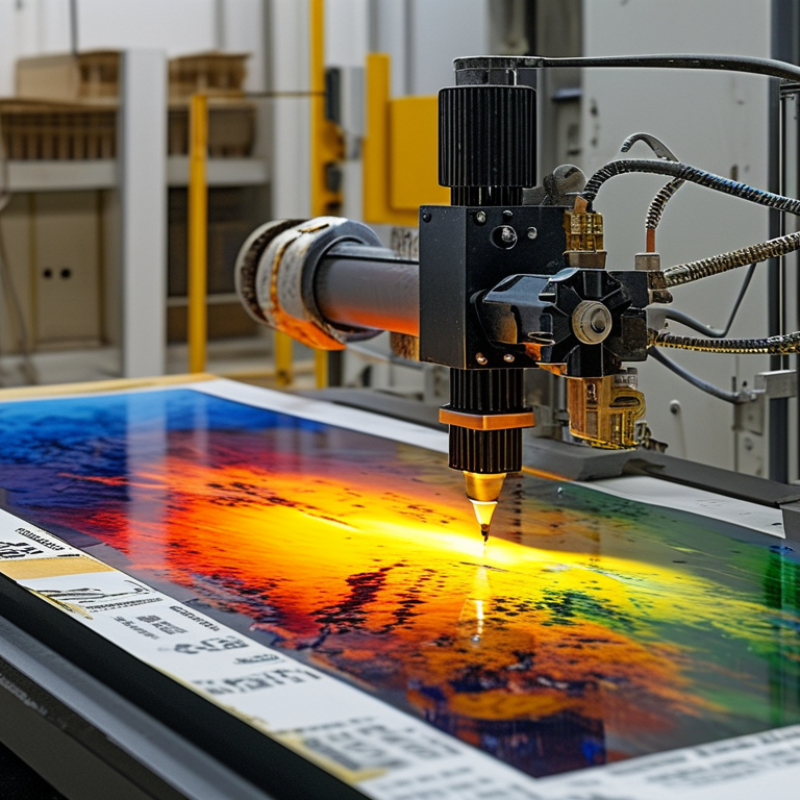
Define the curing requirement before comparing equipment from China. Record the ink, coating, adhesive, substrate, line speed, and target dose. Measure both irradiance and dose. Peak irradiance alone can mislead.
RadTech’s UV+EB Technology Roadmap identifies energy efficiency, throughput, and low-VOC processing as major adoption drivers. Smithers’ The Future of UV LED Curing to 2028 also reports continued growth in UV LED applications, especially industrial printing, electronics, and assembly. These trends matter, but market growth does not guarantee a suitable machine.
Set measurable production goals. Specify the curing wavelength, such as 365, 385, 395, or 405 nanometres. Define minimum irradiance, exposure time, cooling limits, and acceptable surface temperature. For a conveyor line, calculate the dose at the real operating speed, not the showroom speed. Ask for test panels using your actual materials. Check uniformity across the working width. Verify electrical consumption, lamp lifetime, control accuracy, shielding, and replacement-part availability. CE, RoHS, or equivalent documentation should match the destination market.
A low purchase price can become expensive. Downtime hurts more. I would also challenge one common assumption: higher irradiance is not always better. Excess heat may warp plastic, damage electronics, or reduce adhesive performance. Request production records, calibration methods, and service response times. Leave room for uncertainty. Early trials may reveal that your original curing target was incomplete.
Define Your UV Curing Requirements and Production Goals
| Evaluation Dimension | Key Requirement to Define | Typical Production Target or Reference Range | Recommended Equipment Characteristics | Purchasing Verification Point |
|---|---|---|---|---|
| Application Type | Identify whether the process involves coating, ink, adhesive, resin, 3D printing, electronics, or medical components. | Surface coating Bonding Printing Encapsulation | Select a flood, spot, conveyor, chamber, or robotic UV system according to part geometry and process flow. | Confirm that the equipment is designed for the material and curing chemistry being used. |
| UV Wavelength | Match the emitted wavelength to the photoinitiator absorption range specified by the coating, ink, or adhesive supplier. | Common UV LED ranges include approximately 365 nm, 385 nm, 395 nm, and 405 nm. Mercury lamps commonly provide broader UV output. | Choose single-wavelength LED curing for a defined chemistry or multi-wavelength output for a wider material range. | Request a wavelength spectrum or test report rather than relying only on the nominal LED wavelength. |
| Required Irradiance | Determine the minimum irradiance required at the actual curing distance and work surface. | Many industrial applications operate from several hundred mW/cm² to several W/cm², depending on material, thickness, and cycle time. | Use adjustable intensity and calibrated irradiance monitoring when process consistency is important. | Verify irradiance at the workpiece, not only at the light source, and confirm the measurement distance. |
| UV Dose | Define the energy dose required to achieve complete cure without overheating or damaging the substrate. | UV dose is calculated as irradiance × exposure time. The required value must be established through material testing. | Select equipment with controllable exposure time, conveyor speed, lamp power, or LED intensity. | Ask for dose uniformity data across the usable curing area. |
| Curing Area | Measure the largest part, coating width, adhesive bead length, and any future product size requirements. | Typical systems range from small spot areas of a few millimeters to conveyor widths exceeding 1 meter. | Choose a spot head for localized curing, a flood system for batch work, or a conveyor system for continuous production. | Allow clearance for fixtures, workholding, ventilation, and operator access. |
| Production Throughput | Set the required parts per hour, curing time per part, line speed, and planned operating hours. | Calculate capacity using actual cycle time, loading time, inspection time, and planned equipment availability. | Use conveyorized or multi-head equipment for continuous lines and indexed systems for repeatable batch cycles. | Request a production trial using representative parts and the intended process settings. |
| Temperature Sensitivity | Determine the maximum allowable temperature for plastics, films, electronics, lenses, and heat-sensitive assemblies. | UV LED systems generally produce less infrared radiation than conventional mercury lamps, although the workpiece can still heat during curing. | Consider water-cooled or air-cooled LED heads, heat sinks, shielding, and active temperature monitoring. | Measure the actual part temperature during the full production cycle. |
| Curing Uniformity | Define acceptable variation in irradiance and dose across the complete curing area. | Use a validated process tolerance based on coating thickness, bond strength, hardness, and visual quality requirements. | Select systems with optical uniformity, multiple zones, adjustable head height, and repeatable positioning. | Request irradiance mapping and repeatability results for the usable area. |
| Material and Substrate | Evaluate transparency, color, thickness, surface reflectivity, and UV resistance of the substrate. | Clear or translucent materials may allow deeper cure; opaque, dark, or heavily pigmented materials can reduce penetration. | Use suitable wavelength combinations, higher dose capability, or secondary curing methods where penetration is limited. | Conduct adhesion, hardness, tack, and cross-cut tests on the finished product. |
| Control System | Define the level of automation, recipe management, data recording, and process interlocking required. | Basic systems may use manual timers; advanced lines may require PLC communication, alarms, recipes, and traceability. | Choose a controller with password-protected parameters, display of operating hours, and fault diagnostics. | Check compatibility with the existing production line and factory communication standards. |
| Safety Requirements | Control exposure to UV radiation, ozone, heat, moving parts, and electrical hazards. | UV-generating equipment should use shielding, interlocked access doors, warning indicators, and appropriate ventilation. | Prefer enclosed curing chambers or guarded conveyor systems for production environments. | Confirm safety documentation, emergency-stop functions, interlocks, and operating instructions. |
| Maintenance and Service | Estimate cleaning frequency, consumable replacement, calibration intervals, and access requirements. | LED systems typically avoid mercury-lamp replacement but still require optical cleaning, cooling-system maintenance, and output verification. | Choose modular LED heads, accessible filters, replaceable fans or pumps, and clear maintenance indicators. | Obtain spare-parts lists, service procedures, calibration recommendations, and remote-support options. |
| Energy and Operating Cost | Compare electrical consumption, warm-up time, cooling demand, consumables, and expected operating hours. | LED systems can provide instant on/off operation and may reduce standby energy use in intermittent production. | Select power control, automatic standby, zoned illumination, and efficient cooling where appropriate. | Compare total cost of ownership over the expected service period rather than purchase price alone. |
| Quality Validation | Define the test method for confirming cure performance and product reliability. | Common checks include tack-free condition, hardness, adhesion, bond strength, chemical resistance, and visual inspection. | Use equipment capable of storing repeatable process parameters and supporting validation trials. | Approve the final specification only after testing production materials, production speed, and actual fixtures. |
| Budget and Delivery | Set the investment limit, installation requirements, delivery schedule, training needs, and acceptance criteria. | Budget should include tooling, shielding, exhaust, electrical work, spare parts, calibration, shipping, and installation. | Request a complete technical quotation with configuration, utilities, warranty terms, documentation, and commissioning scope. | Use a written acceptance test covering output, uniformity, safety, throughput, and temperature performance. |
: Record the material, substrate, line speed, wavelength, irradiance, dose, exposure time, and temperature limit. Measure both irradiance and dose. Peak power alone can mislead. Use real production conditions.
Match the light spectrum to the adhesive, coating, ink, or resin. Broad-spectrum lamps suit many traditional materials. LED systems usually provide lower heat and precise wavelength control. Surface-treatment systems need tighter process control.
Common choices include 365, 385, 395, and 405 nanometres. Select the wavelength that matches the material’s absorption range. A powerful lamp can still cure poorly.
Spot systems suit small assemblies and electronic components. Flood systems cover irregular parts. Conveyors support continuous production. Chambers suit controlled batch exposure. Geometry matters more than appearance.
Request measured irradiance, wavelength range, dose, curing speed, and temperature data. Test your actual adhesive, coating, substrate, or ink. Use your real working distance and line speed. Check adhesion, hardness, uniformity, and surface tack.
Confirm conveyor height, curing width, line speed, electrical supply, ventilation, and control signals. Check emergency stops, interlocks, alarms, and data logging. Test communication with your production controller when possible. Interfaces deserve another review.
Physically inspect shielding, access doors, viewing windows, warning labels, and leakage measurements. Verify grounding, heat protection, and lockout procedures. Safety documents must match the destination market’s requirements. Do not rely on promises alone.
Ask about lamp or LED life, filter cleaning, cooling airflow, replacement time, and calibration support. Request spare-part lists and realistic service response times. Keep inspection records. Human habits still matter.
Not always. Downtime, weak calibration, and unavailable parts can become expensive. Compare electrical consumption, maintenance time, replacement costs, and service support. Run several sample cycles before deciding. An uncomfortable test result may prevent months of rework.
Selecting the best UV curing equipment from China begins with clearly defining your production goals, materials, curing speed, substrate requirements, and available workspace. To understand how to select uv curing equipment for printing applications, compare different UV technologies, including LED and traditional lamp systems, while considering wavelength, power, cooling methods, energy efficiency, and equipment format. The right solution should match your print quality targets, production volume, and integration needs.
Next, evaluate potential Chinese manufacturers by reviewing their certifications, engineering experience, quality-control procedures, customization capabilities, and after-sales support. Verify curing performance through sample testing, production trials, safety inspections, and compatibility checks with existing machinery. Maintenance access, replacement-part availability, operating costs, and user training should also be assessed. Finally, calculate the total cost of ownership rather than focusing only on the purchase price. A supplier that offers reliable performance, transparent communication, technical assistance, and long-term service can provide greater value and reduce operational risks.

 LumiCure Light