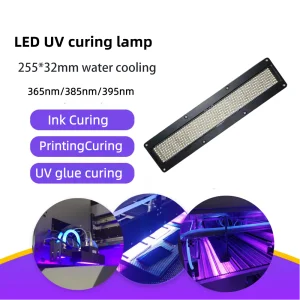
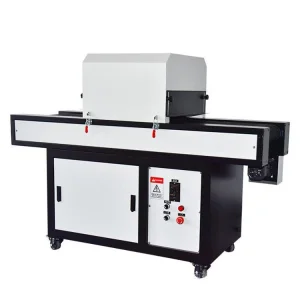
Explore our leading modular solid-state UV curing assemblies, designed with proprietary thermal engineering and premium high-irradiance LED chip architectures.
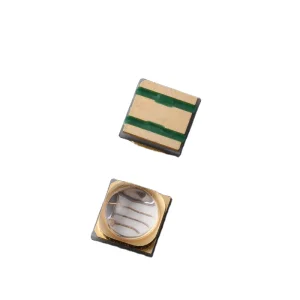
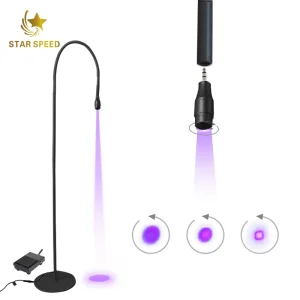
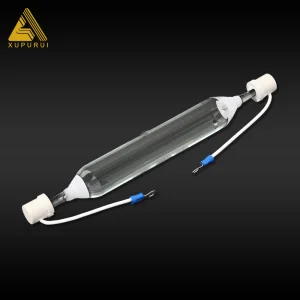
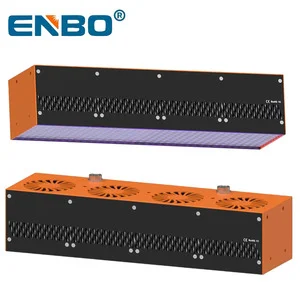
Industrial polymer curing has undergone a massive paradigm transition. The historical dominance of mercury arc lamps is declining rapidly due to environmental directives (such as the Minamata Convention on Mercury), high power costs, and substrate thermal degradation. Traditional curing mechanisms suffered from broadband emission, transferring extreme infrared heat to substrates, which limited production lines to thick, heat-resistant components.
Modern UV LED solid-state systems target narrow emission spectra (most notably 365nm, 385nm, 395nm, and 405nm). This precision delivers photons directly matched to the absorbance bands of photoinitiators in specialized formulations (monomers, oligomers, and additives), accelerating polymerization in milliseconds. Crucially, the absence of IR radiation allows thin-film plastics, delicate electronics, and complex optical bonding assemblies to cure seamlessly without dimensional distortion.
Precision selection of UV emission spectra determines curing depth, crosslinking density, and mechanical performance of the cured polymer.
Highly effective for surface crosslinking. Shorter wavelengths carry higher photon energy, which helps overcome oxygen inhibition in thin coatings, producing high-hardness, scratch-resistant surface barriers in varnish and protective paints.
Longer wavelengths scatter less inside pigmented matrices. Ideal for curing opaque inks, thick structural adhesives, composite laminates, and dense underfills where light must penetrate deep into the material.
Operating close to the visible light spectrum, 405nm delivers safer operation, deep-section thick resins cure (e.g. 3D printing SLA/DLP resins), and ultra-fast curing for cosmetic medical adhesives and consumer lashes.
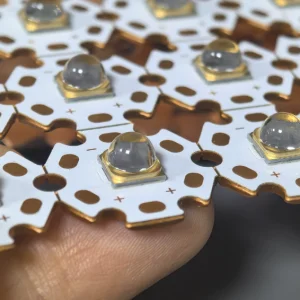
Because UV LED chips convert roughly 20-30% of input electrical energy into UV photons, the remaining 70-80% is converted directly to thermal energy at the diode junction. High junction temperatures reduce LED lifetime and degrade wavelength stability. Dongguan LumiCure Light Co., Ltd. integrates custom copper micro-channel water blocks and high-flow thermal fins to dissipate heat efficiently, maintaining junction temperatures below 60°C for stable, continuous industrial processes.
No single curing process is identical. Wavelength intensity profile, beam shape, physical enclosure restrictions, and electrical control interfaces vary drastically between a high-speed roll-to-roll press and a precision semiconductor pick-and-place assembly line.
LumiCure provides a comprehensive engineering workflow to custom-design systems that directly integrate into your machinery:
Matching target adhesive/ink photoinitiator profiles with specific peak irradiance and dose requirements (J/cm²).
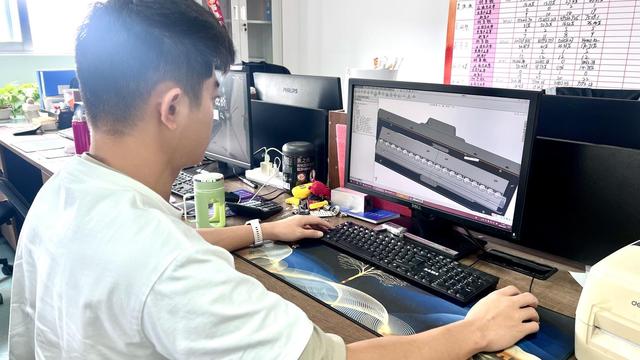
Ray tracing simulation for optical uniformity and CFD modeling for thermal dissipation.
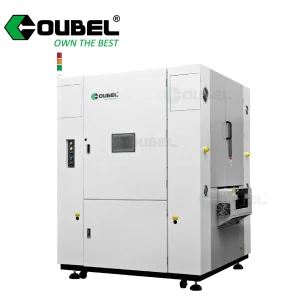
Automated SMT chip placement, rigorous environmental stress chamber testing, and final optical profiling.
Different regions and industries pose specific technical requirements for automated UV LED curing systems.
Rigid safety requirements (CE, UL, RoHS compliance) drive the shift away from mercury systems. Main applications focus on high-precision medical device bonding (USP Class VI adhesives), automotive sensor encapsulation, and green packaging offset printing.
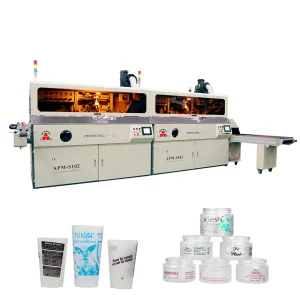
Focused heavily on automated electronics manufacturing, PCB assembly line conformal coatings, screen printing for consumer goods, and solar module lamination. Systems must withstand 24/7 continuous operation with minimum maintenance overhead.
Demands robust cooling configurations and sealed dust-proof designs (IP54/IP65 ratings) to run continuously under high ambient dust and temperature conditions. Widely used for structural wood coatings and metal finishing pipelines.
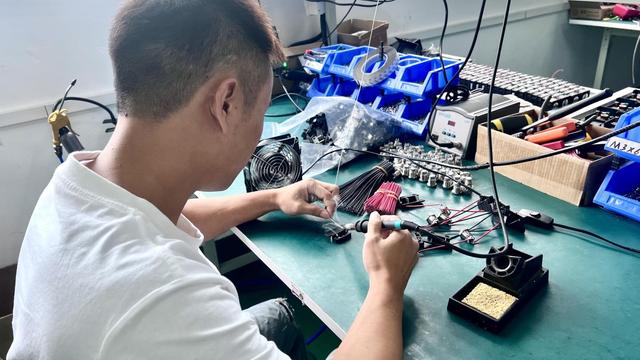
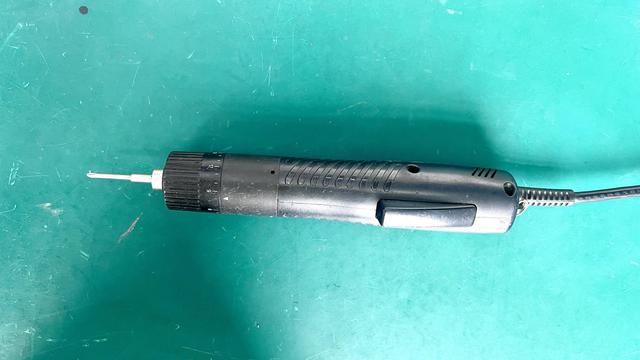
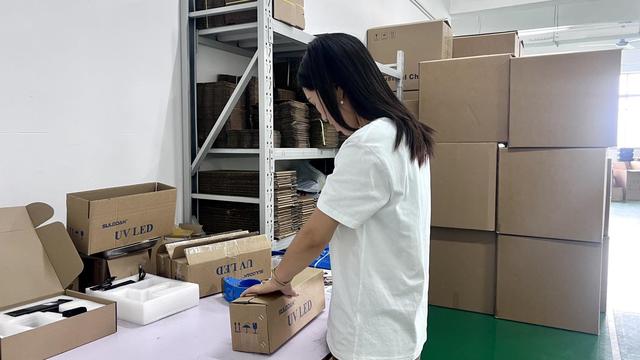
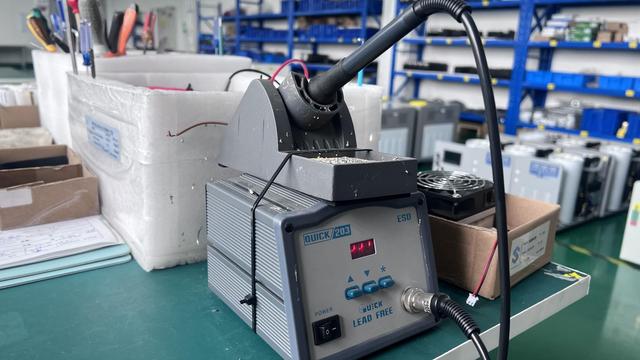
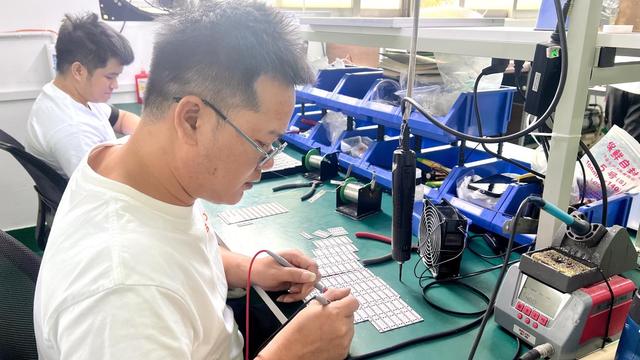
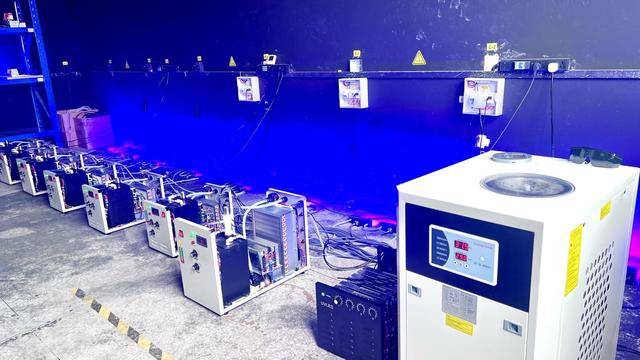
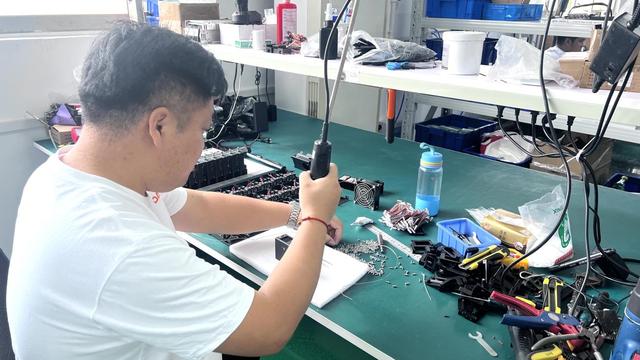
Operating a state-of-the-art facility specialized in optoelectronic packaging, automated testing, and assembly.
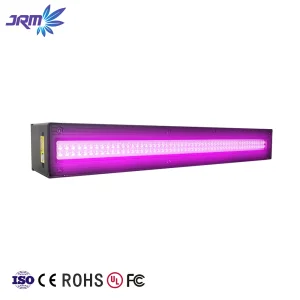
LumiCure is a leading industrial UV LED curing manufacturer, providing deep R&D expertise, custom PCB layout design, and structural thermal engineering. From high-powered water-cooled arrays up to 40kW to precision mini-lamps, we manufacture all components to meet stringent CE and ISO9001 quality guidelines.
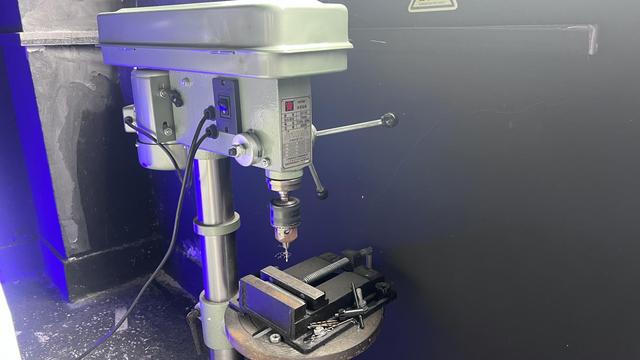
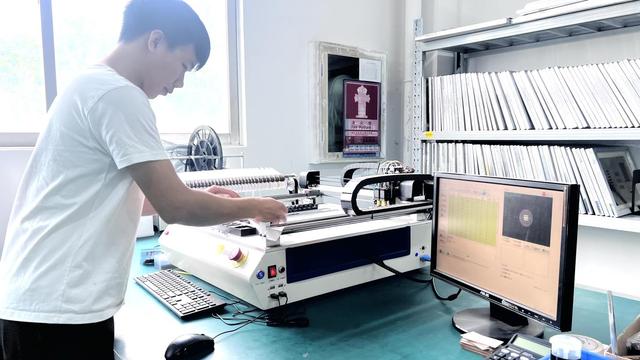
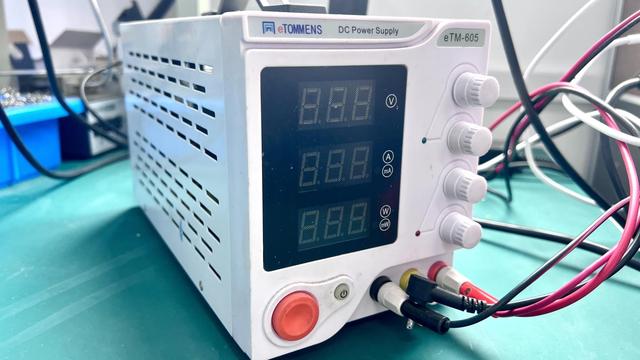
Addressing the technical, mechanical, and optical parameters crucial to industrial buyers and production line engineers.
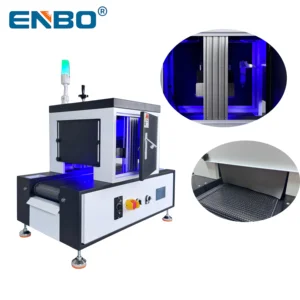
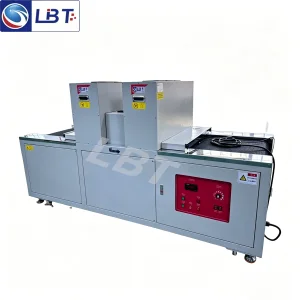
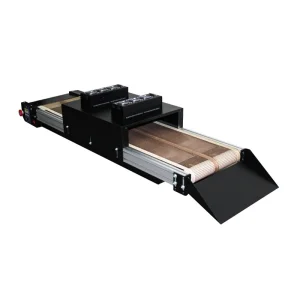
Complete assembly stations, conveyor ovens, and high-power custom solutions for assembly plants.
 LumiCure Light