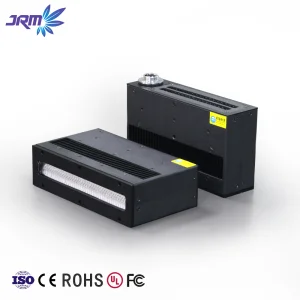
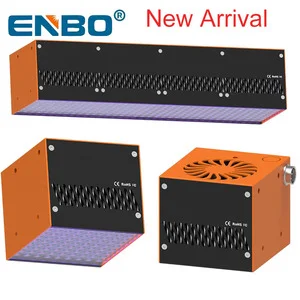
Highly integrated modules with optimized thermal management engineered for high-precision microelectronics, high-speed optical printing, and localized assembly lines.
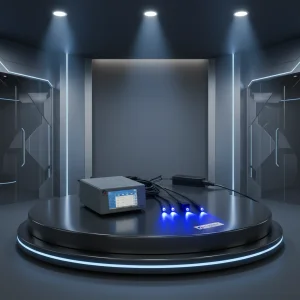
South Korea’s technological capital has evolved into the absolute epicentre of microelectronics, global display innovations, and highly automated assembly lines. In the Guro and Gasan Digital Complexes, along with technology corridors extending into Gyeonggi Province (Suwon, Hwaseong, and Pyeongtaek), local industries demand uncompromising reliability in manufacturing equipment. Curing processes—traditionally dependent on highly hazardous and energy-inefficient mercury discharge lamps—are being systematically replaced by high-performance UV LED industrial curing modules.
This rapid technological shift is fueled not only by strict national policies such as South Korea’s Chemical Control Act and K-REACH but also by the microelectronics industry’s demand for ultra-precise heat management. Standard display layers and semiconductor chips cannot tolerate thermal distortions. Specialized UV LED module suppliers catering to the Seoul market must deliver units with stable peak irradiance, uniform light dispersion, and long-term wavelength integrity to prevent expensive defects in optical bonding and photolithography lines.
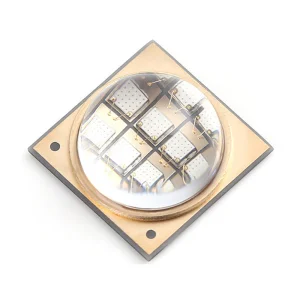
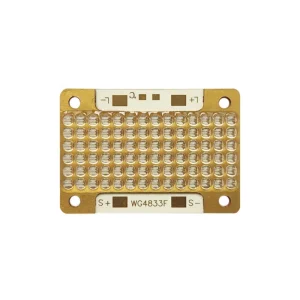
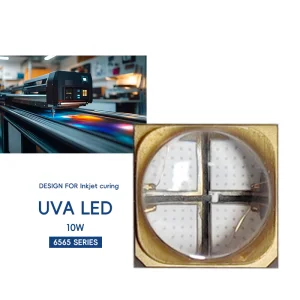
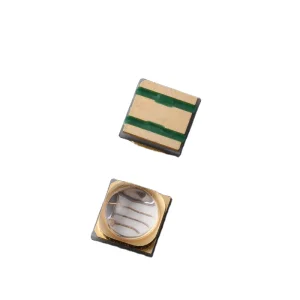
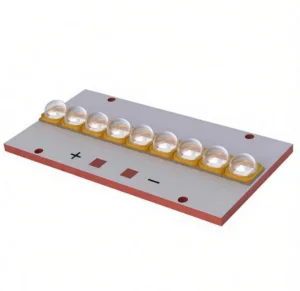
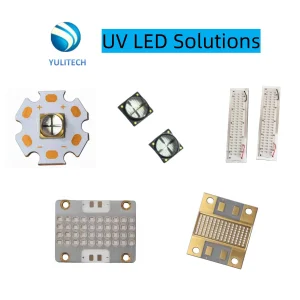
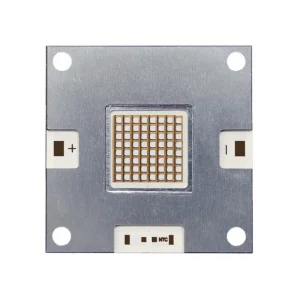
LumiCure provides the Seoul market with the high-performance optical solutions required by modern automation. Our UV LED modules employ advanced Chip-on-Board (COB) packaging configurations built directly onto ultra-conductive copper-clad substrates. This design guarantees thermal resistance far lower than traditional SMD packages, preventing thermal shift and protecting the target substrate from thermal degradation.
To serve the specific needs of electronics and specialty print machinery in Seoul, LumiCure supplies modules covering the key spectrum wavelengths: 365nm (for deep layer curing and structural optical bonding), 385nm/395nm (ideal for surface pinning and high-speed industrial digital inkjet systems), and 405nm (for highly filled epoxy resins and thicker polymer formulations). Our integration of smart monitoring features allows Korean fab lines to continuously audit UV intensity, thermal margins, and diode health via PLC networks.
How state-of-the-art UV LED technology optimizes yield across diverse manufacturing sectors.
In display manufacturing, optical bonding of touch screen panels and OLED encapsulation require exact UV doses without thermal accumulation. LumiCure's 365nm water-cooled UV LED modules deliver uniform high irradiance across wide arrays, guaranteeing complete cure profiles on substrates susceptible to thermal cracking.
With printing centers moving toward low-VOC and zero-ozone manufacturing, our 385nm and 395nm UV LED arrays supply consistent radiant energy for high-speed label, rotary, and wide-format inkjet systems, enabling immediate dry-to-touch processing on plastic, glass, and wood.
From medical device needle bonding to complex automotive electronics conformal coatings, we deliver industrial spot and flood curing configurations. Advanced optical designs minimize stray light while maximizing core light penetration deep into polymer layers.
Consult with our optoelectronic specialists for tailored wavelength setups, mechanical integrations, and cooling architectures designed to improve process reliability.
Send Inquiry NowBuilding long-term industrial relationships in the Seoul Metropolitan Area requires more than just high-performance equipment. Suppliers must align with national regulatory and support expectations. LumiCure guarantees that our components meet Korean compliance guidelines, including KC (Korea Certification) safety and electromagnetic compatibility standards, protecting manufacturing lines from uncertified downtime and compliance risks.
We work directly with local engineering partners and automation integrators in Gyeonggi-do and Seoul's major technology zones. Our supply chain ensures that replacement parts, customized optical arrays, and field engineers are accessible. We also coordinate with local chemical formulation teams to conduct pre-delivery testing on local resins, ensuring our UV LED emission spectra perfectly match the chemical absorption curves of local photoinitiators.
A critical consideration for chemical engineers adopting UV LED systems is the spectral distribution of the light source. Traditional mercury lamps emit a broad range of wavelengths, wasting energy on infrared (heat) and hazardous shortwave UVC emissions. By contrast, LumiCure's high-purity diodes focus radiant output into narrow bands (±5nm), aligning precisely with photoinitiator absorption profiles. Below is an overview of optimized wavelengths by application:
How LumiCure is driving next-generation engineering in solid-state UV technologies.
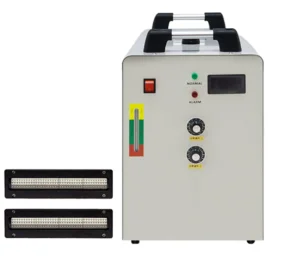
As the need for higher energy density grows, managing thermal loads becomes critical. Our upcoming module generation integrates micro-channel copper heatsinks with optimized liquid cooling circuits. This technology reduces diode junction temperatures by up to 15°C, allowing stable peak intensities up to 30 W/cm² under continuous operation without spectral drift.
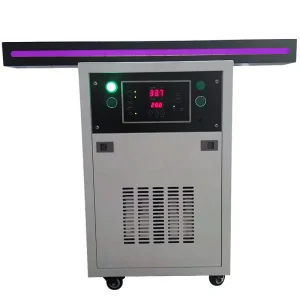
Modern smart factories in Seoul rely on real-time diagnostic systems. LumiCure's new digital drivers feature Modbus/EtherNet communication ports. Operators can monitor voltage shifts, track operating temperatures, log historical run hours, and receive predictive maintenance alerts before diode degradation affects curing quality.
Certain industrial coatings require complex curing cycles—for example, long-wavelength UV for deep curing followed by short-wavelength UV for surface curing. Our engineering team designs hybrid arrays combining 365nm and 395nm chips inside a single modular housing. These arrays allow precise curing profiles controlled through customized driver channels.
Aligning with global sustainability directives (such as the Minamata Convention on Mercury), our research team is optimizing green manufacturing processes. By moving away from heavy metal construction and reducing power usage by up to 80%, we help factories lower their carbon footprints while maintaining fast production cycles.
Addressing the critical engineering, integration, and procurement questions for Seoul-based operations.
Explore our complete range of high-performance curing modules, light sources, and custom semiconductor-grade modules.
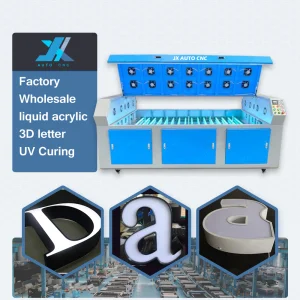
Dongguan LumiCure Light Co., Ltd. is a professional China UV LED curing lamp manufacturer specializing in the research, development, production, and supply of industrial UV curing systems and customized UV LED solutions. With a strong focus on innovation, quality, and customer satisfaction, LumiCure has become a trusted partner for manufacturers worldwide seeking efficient and reliable curing technologies.
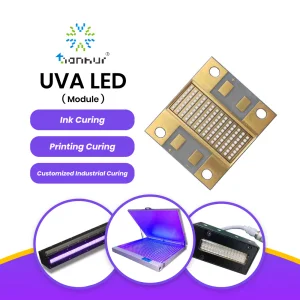
Our product range includes UV LED curing lamps, UV LED spot curing systems, flood curing lamps, conveyor UV curing machines, UV LED modules, printing curing systems, adhesive curing equipment, and customized industrial UV solutions. These products are widely applied in printing, electronics assembly, semiconductor packaging, optical bonding, automotive manufacturing, medical devices, 3D printing, and various precision industrial processes.
Backed by an experienced engineering team and advanced manufacturing facilities, LumiCure is committed to developing energy-saving and environmentally friendly UV curing technologies. Our products feature high curing efficiency, precise wavelength output, long service life, low maintenance requirements, and intelligent control capabilities, helping customers improve productivity while reducing operating costs.
Quality remains the foundation of our business. Every product undergoes rigorous testing and strict quality control procedures throughout the manufacturing process to ensure consistent performance and reliability. We also provide comprehensive OEM and ODM services, enabling customers to customize products according to their specific technical and application requirements.
Serving clients across Europe, North America, Asia, the Middle East, and other global markets, Dongguan LumiCure Light Co., Ltd. continues to deliver innovative UV LED curing solutions that support sustainable and efficient industrial manufacturing.
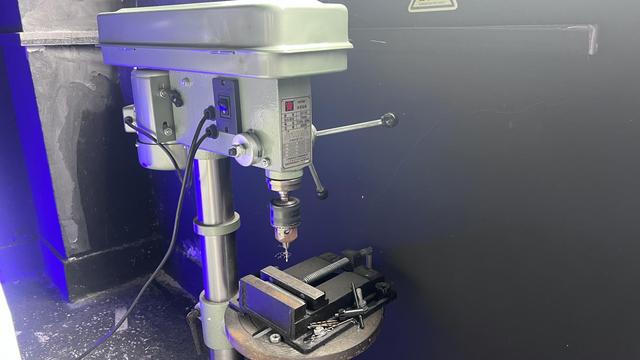
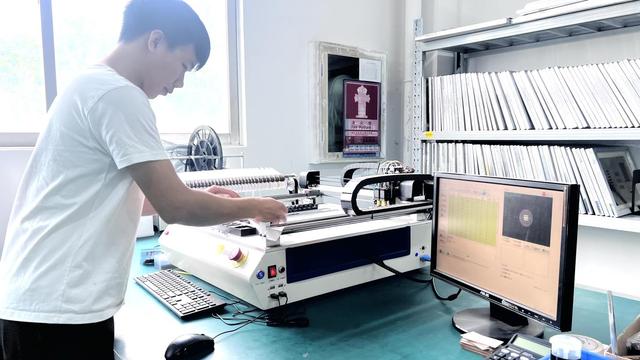
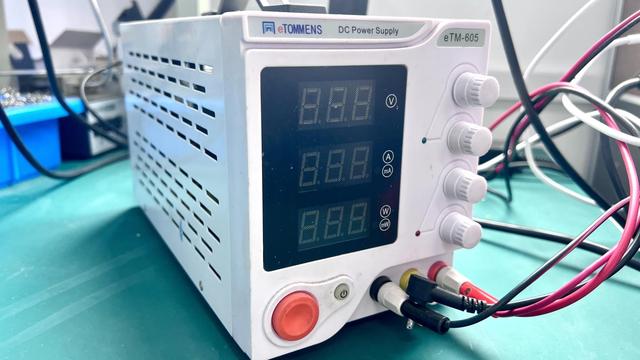
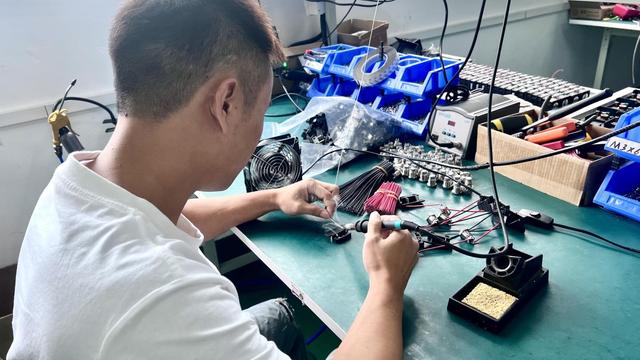
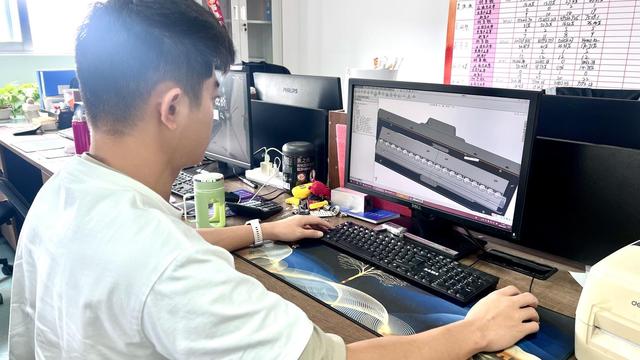
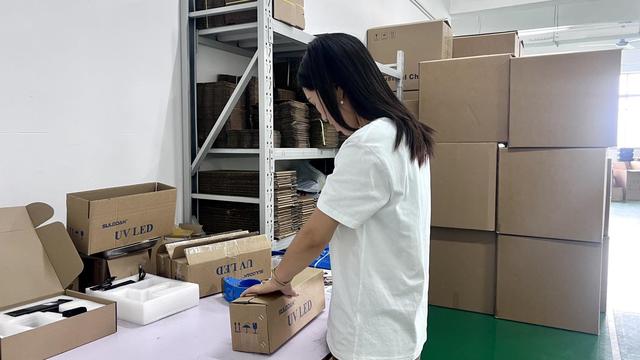
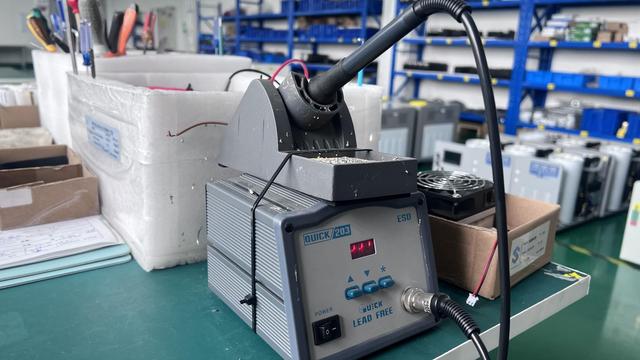
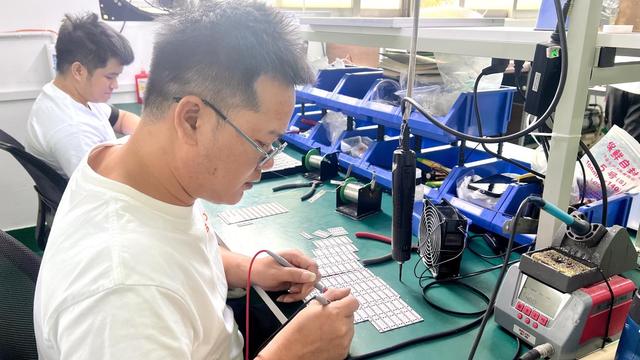
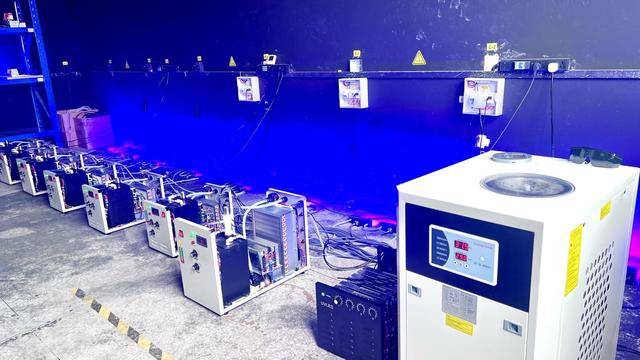
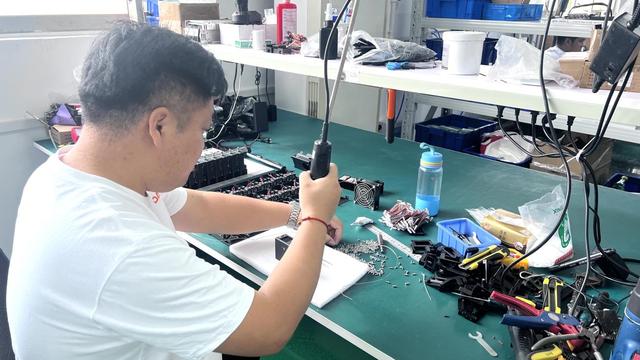
Our state-of-the-art production floors house automated pick-and-place systems, cleanroom assembly zones for optical modules, and specialized spectral profiling laboratories. By maintaining tight control over thermal bonding and electrical testing, we guarantee consistent quality across every batch of UV modules shipped to the South Korean market and other global manufacturing corridors.
 LumiCure Light