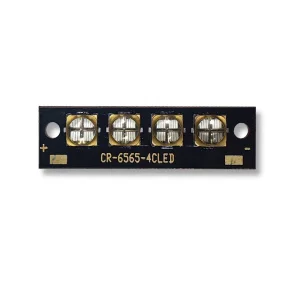
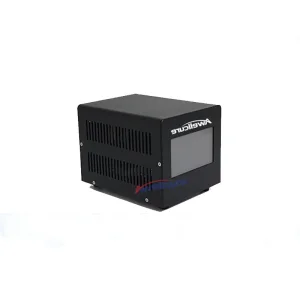
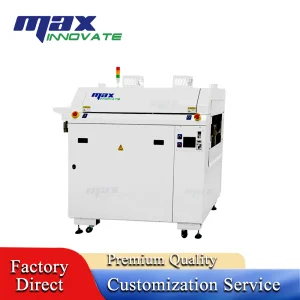
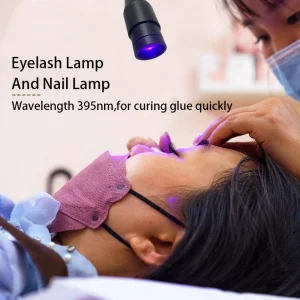
Engineered for high-intensity output, spectral stability, and advanced thermal management in high-throughput industrial lines.
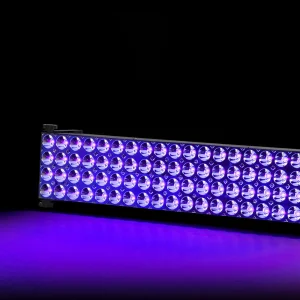
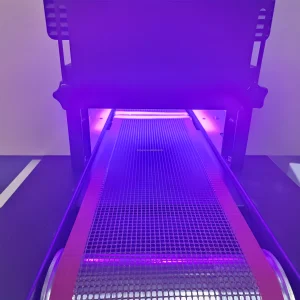
The industrial shift from traditional mercury vapor discharge lamps to solid-state semiconductor UV light sources marks a profound technological evolution. Traditional mercury arc systems rely on broadband emission, releasing significant amount of infrared thermal radiation alongside erratic UV spectra. This leads to excessive substrates heat stress, system instability, and high degradation rates.
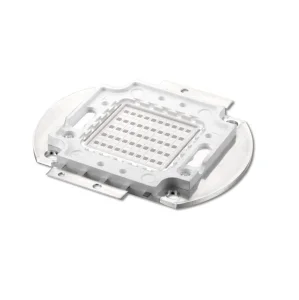
Conversely, UV LED curing mechanisms operate via targeted emission profiles. By leveraging high-density light-emitting diode arrays, energy is focused into narrow spectral profiles (typically 365nm, 385nm, 395nm, or 405nm). This precise wavelength tuning matches the absorbance characteristics of industrial photoinitiators (such as Phosphine Oxide, Benzophenone, and Thioxanthone derivatives) to trigger rapid free-radical or cationic cross-linking polymerization.
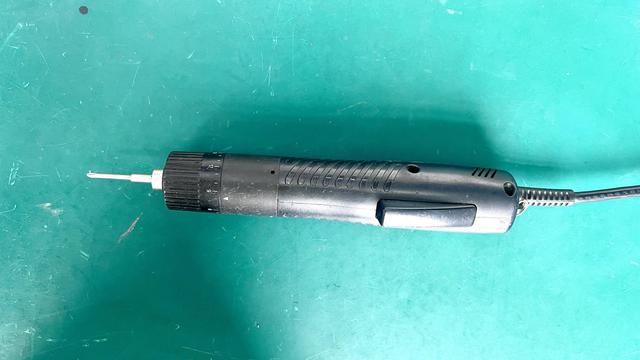
A global leader in standard and bespoke industrial UV curing systems engineering.
Based in the manufacturing hub of Dongguan, China, LumiCure Light Co., Ltd. is a dedicated manufacturer specializing in high-performance solid-state UV curing platforms. We bridge the gap between optoelectronic research and industrial manufacturing by providing high-reliability, energy-efficient solutions for printing, micro-electronics, automotive coating, and medical component bonding.
How China's optoelectronic ecosystem delivers unparalleled value, innovation velocity, and supply chain security for B2B global enterprises.
China's specialized optoelectronic clusters enable immediate, cost-effective access to key components. From high-grade chip packaging and quartz glass optics to precise aluminum heat sinks and CNC enclosures, our integrated supply chain accelerates production and guarantees consistent quality.
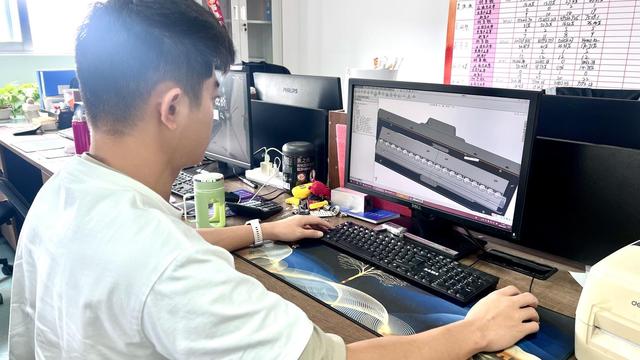
Industrial machinery often requires custom integration. LumiCure leverages dedicated mechanical, electronic, and optical engineering teams to quickly design and prototype custom UV LED arrays, custom mounting systems, and PLC configurations to match your exact spatial and power requirements.
Operating as an export-centric manufacturer, LumiCure enforces strict compliance with international industrial safety and emission frameworks. Our complete product portfolio meets CE, RoHS, and FCC certifications, ensuring trouble-free integration into international assembly lines.
Bespoke curing solutions tailored for high-accuracy and high-volume industrial workflows.
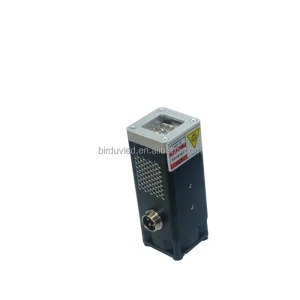
Curing of conformal coatings, underfills, and structural adhesives in PCB and component assembly. Our air-cooled 365nm curing systems deliver precise optical doses without generating high temperatures that can damage delicate semiconductor junctions or sensitive micro-components.
Ideal for liquid optically clear adhesive (LOCA) curing in display laminations, camera module alignment, and touch-screen glass integration. Uniform spatial irradiance ensures zero yellowing and minimizes internal mechanical stresses inside optical packages.
Tailored for high-speed single-pass inkjet printing, wide-format graphic flatbeds, and label flexographic web printers. High-peak power (up to 16 W/cm² or 20 W/cm²) is delivered to achieve dry-to-touch surface curing of thick ink layers in milliseconds.
High-reliability systems for adhesive assembly of needles, catheter lines, dialyzers, and surgical instruments. LumiCure's closed-loop irradiance feedback control guarantees consistent UV exposure, complying with demanding quality audits.
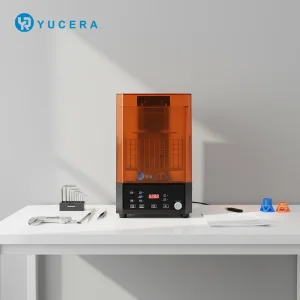
Optimized for SLA, DLP, and LCD photo-curing printers. Our multi-wavelength flood chambers and custom exposure boxes achieve uniform post-cure polymerization, ensuring parts reach their full mechanical properties quickly.
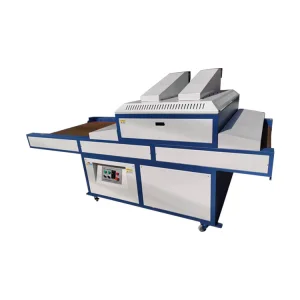
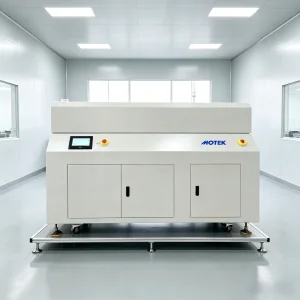
From conveyor-based curing ovens for roll-to-roll materials to automated robotic spot curing cells. Our customized engineering services design, test, and deliver unique curing mechanisms configured specifically for your facility's automated workflow.
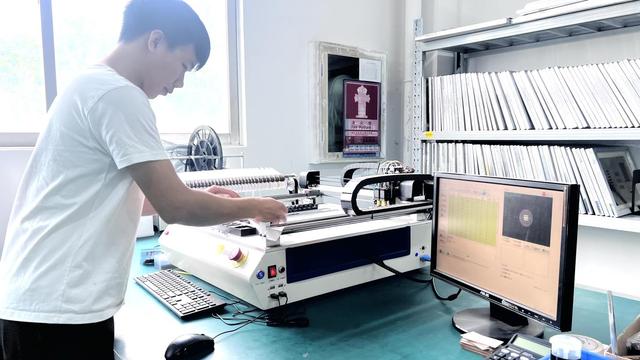
Selecting an industrial UV LED curing platform requires analyzing key optical and electrical parameters to match the system to your material's curing dynamics.
1. Peak Irradiance vs. Energy Density (Dosage): Peak irradiance ($W/cm^2$) is the maximum light intensity received at the substrate surface, which is critical for overcoming oxygen inhibition in thin coatings. Energy density ($J/cm^2$) is the total optical energy delivered over time, which determines the depth of cure in thicker layers.
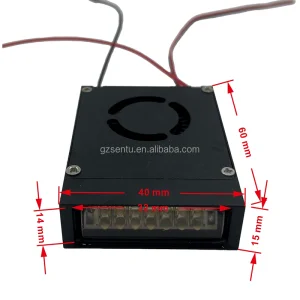
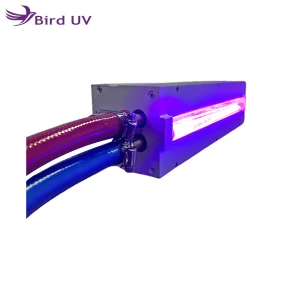
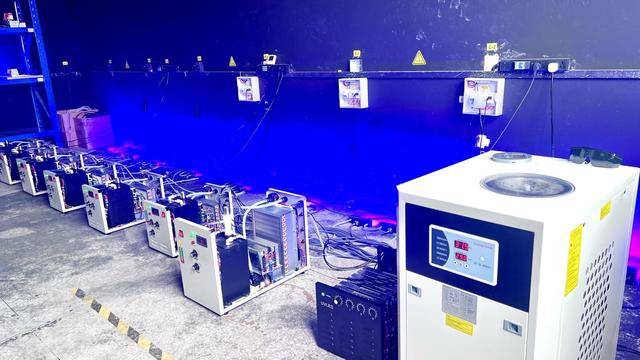
2. Thermal Dissipation Management: Keeping the LED junction temperature below 75°C is critical for preventing chip degradation and wavelength shifts. High-power systems require liquid-cooled copper blocks, while compact units can utilize high-efficiency air-cooling heat sinks.
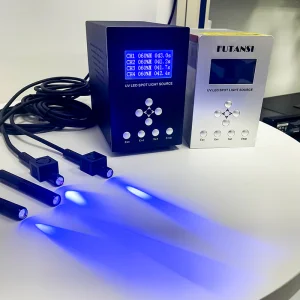
3. Optics and Beam Angle: The choice of reflector or lens determines light distribution. Focused reflector profiles are used for high-intensity spot curing, while diffuse quartz window optics provide uniform coverage for wider conveyor lines.
In-depth insights from our applications laboratory on optimizing solid-state polymerization processes.
Heavy-duty, high-performance curing platforms designed for continuous industrial operation.
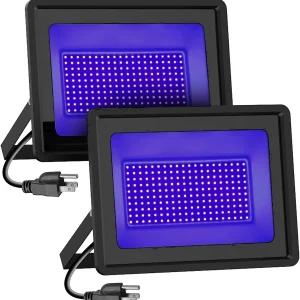
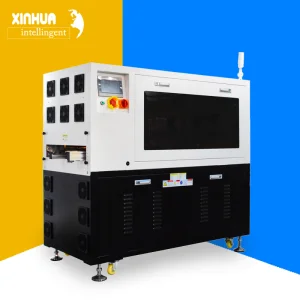
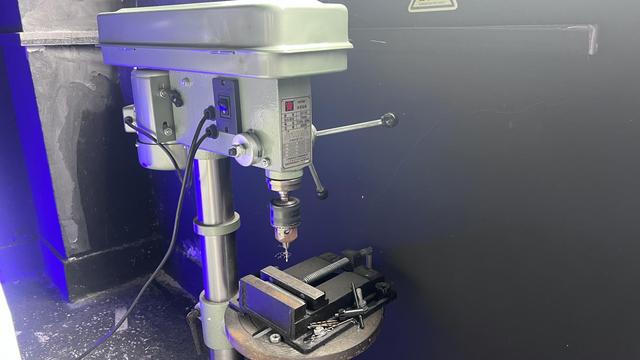
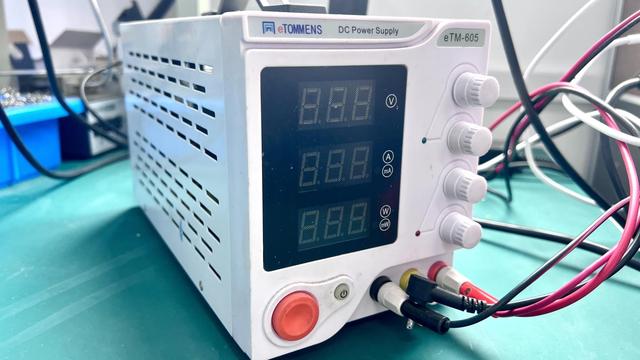
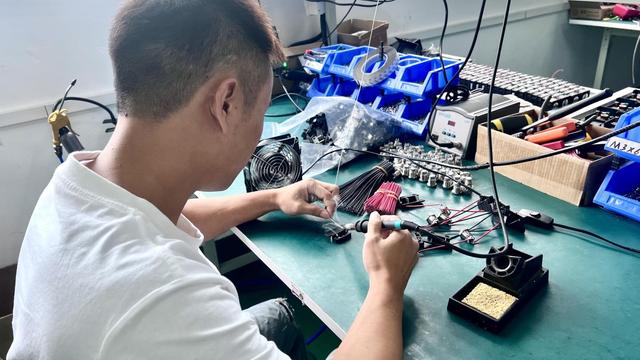
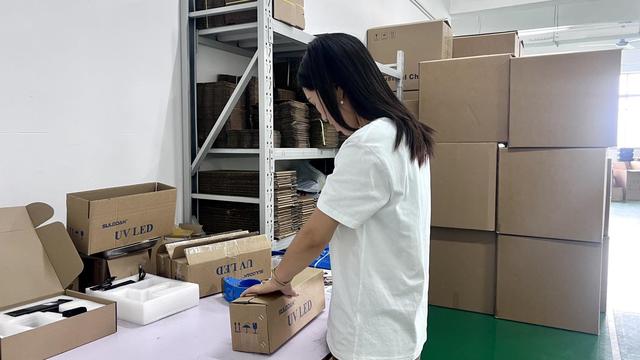
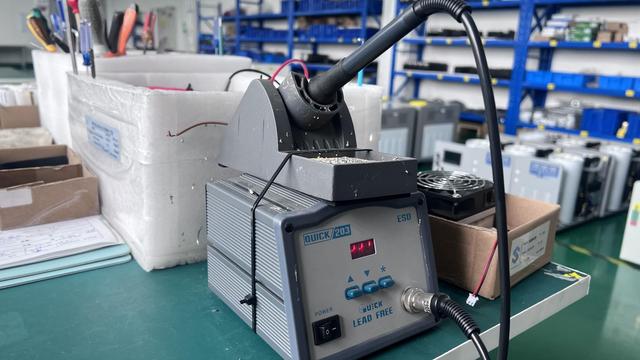
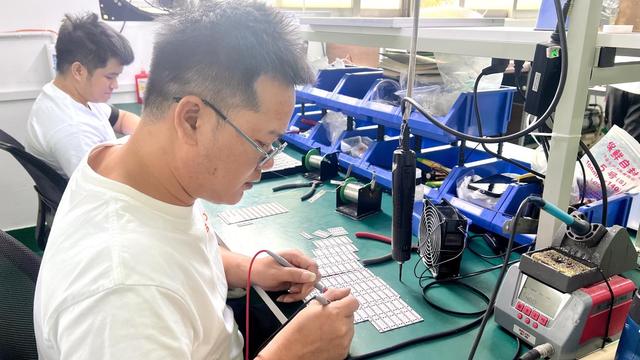
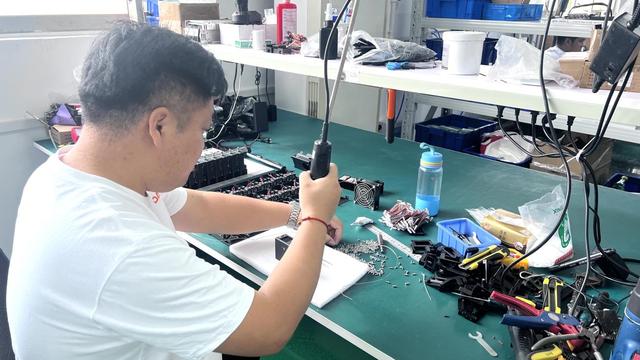
Inspect our ISO 9001:2015 certified manufacturing environment, high-precision chip assembly line, and spectral diagnostic laboratory.
 LumiCure Light