Top 10 UV LED Light Application Factory & Exporters

Whitepaper: Global Industrial Outlook, Curing Wavelengths, Supply Chain Dynamics, and High-Performance Applications

LumiCure Market Position & Global Strength

High Performance Curing Solutions by Numbers

10+
Years R&D Experience
98%
Energy Efficiency Shift
50+
Export Countries & Regions
20k+
Customized Arrays Delivered

Global Industrial Landscape of UV LED Technology

The industrial landscape is undergoing a massive transformation as solid-state UV LED systems systematically replace conventional medium-pressure mercury arc lamps. Traditional mercury systems are held back by their extensive heat generation, long warm-up cycles, mercury pollution hazards, and brief operational lifespans of roughly 1,000 to 2,000 hours. In contrast, modern UV LED curing technology delivers upward of 20,000 hours of stable output. Because LEDs run cool and emit a narrow spectral bandwidth, they can safely process thin, heat-sensitive plastics without warping or burning them.

This technology shift is accelerated by global environmental mandates, such as the Minamata Convention on Mercury. These agreements push industries to eliminate toxic components from their manufacturing lines. In printing, semiconductor, and medical applications, companies are upgrading to narrow-spectrum UV LEDs (primarily 365nm, 385nm, 395nm, and 405nm). By targeting specific wavelengths, factories can cure inks, coatings, and adhesives instantly. This focused approach reduces overall energy usage by up to 70% and helps operators meet strict environmental, safety, and health guidelines.

Targeted Wavelength Engineering: Wavelength-Specific Solid State Curing

Understanding wavelength selection is critical for industrial process design. Specific photochemical systems require exact spectral matches to cure correctly:

  • 365nm Wavelength: The industry standard for surface curing, optical bonding, and shadowless adhesive applications. Excellent for glass-to-metal bonding and thin coatings because it cures surface layers quickly.
  • 385nm & 395nm Wavelengths: Offering deeper penetration profiles, these wavelengths are ideal for thick ink layers in flexographic, screen, and offset printing. They cure the base layer thoroughly, ensuring the print bonds firmly to the substrate.
  • 405nm Wavelength: Often combined with 365nm or used alone for deep resin curing in 3D printing and PCB solder mask applications. This range minimizes light scattering for cleaner, sharper lines.
  • 293nm - 295nm (UVB): Specialty wavelengths used in medical and photomedicine configurations, including synthesis research, targeted vitamin D synthesis, and precise chemical processes.
Key Drivers of Industrial UV LED Adoption

Why modern production floors are converting to solid-state UV curing

High Efficiency & Instant Power

Unlike mercury bulbs that require 10-15 minute warm-up cycles, UV LED chips turn on and off instantly. This reduces energy consumption during idle periods and shortens overall production cycles.

Extended Operation Lifespan

Engineered for over 20,000 hours of continuous use. Consistent spectral output and minimal degradation ensure reliable curing results, even during years of high-volume runs.

Eco-Friendly & Safe Operation

Zero mercury waste, zero ozone emissions, and minimal heat output. Protects operators, helps businesses meet ESG requirements, and makes it safe to cure heat-sensitive substrates.

China's Manufacturing Supremacy and Dongguan LumiCure's Edge

Dongguan, located in China's Pearl River Delta, has established itself as the global capital for precision manufacturing, optical assembly, and electronics supply chains. Within this dynamic tech hub, Dongguan LumiCure Light Co., Ltd. has grown into a leading manufacturer and exporter of UV LED curing systems. The company relies on Dongguan's established network of component suppliers, raw materials, and optical designers to keep production fast, flexible, and cost-effective.

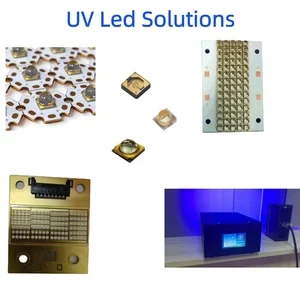
LumiCure’s manufacturing efficiency goes beyond simple assembly. The company manages the entire product cycle, from high-precision SMD chip packaging and advanced thermal simulation to automated CNC housing fabrication and final system testing. This direct control over the supply chain allows LumiCure to design custom multi-wavelength modules for global buyers at a fraction of the cost of Western competitors. The result is high-performance curing equipment delivered with much shorter turnaround times.

Dongguan LumiCure Light Co., Ltd. is a professional China UV LED curing lamp manufacturer specializing in the research, development, production, and supply of industrial UV curing systems and customized UV LED solutions. With a strong focus on innovation, quality, and customer satisfaction, LumiCure has become a trusted partner for manufacturers worldwide seeking efficient and reliable curing technologies.

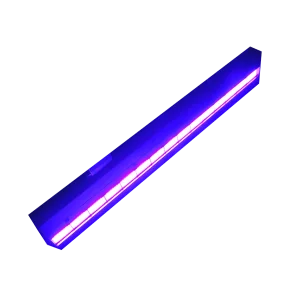
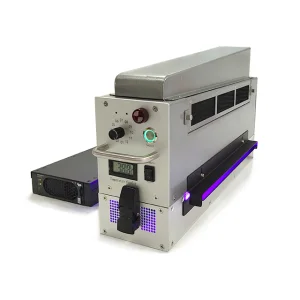
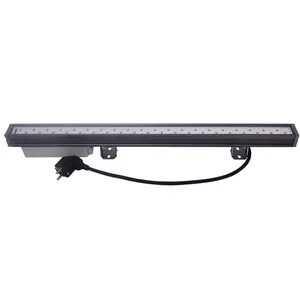
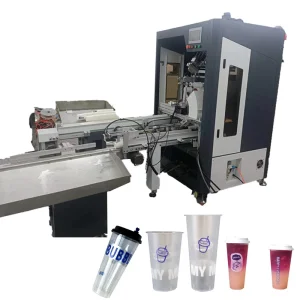
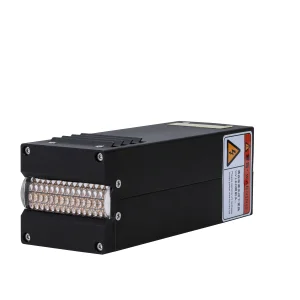
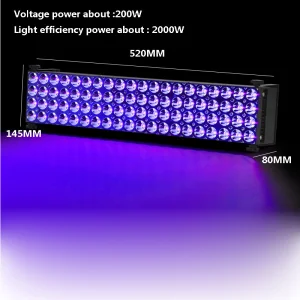
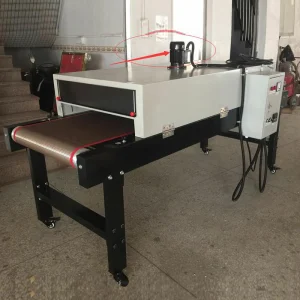
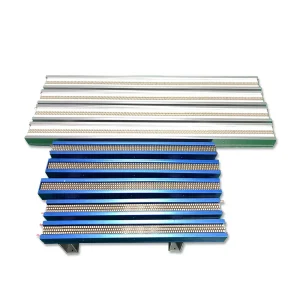
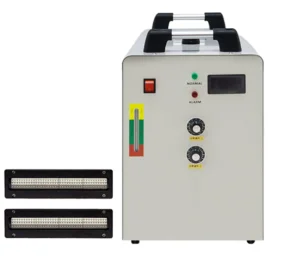
Our product range includes UV LED curing lamps, UV LED spot curing systems, flood curing lamps, conveyor UV curing machines, UV LED modules, printing curing systems, adhesive curing equipment, and customized industrial UV solutions. These products are widely applied in printing, electronics assembly, semiconductor packaging, optical bonding, automotive manufacturing, medical devices, 3D printing, and various precision industrial processes.

Backed by an experienced engineering team and advanced manufacturing facilities, LumiCure is committed to developing energy-saving and environmentally friendly UV curing technologies. Our products feature high curing efficiency, precise wavelength output, long service life, low maintenance requirements, and intelligent control capabilities, helping customers improve productivity while reducing operating costs.

Quality remains the foundation of our business. Every product undergoes rigorous testing and strict quality control procedures throughout the manufacturing process to ensure consistent performance and reliability. We also provide comprehensive OEM and ODM services, enabling customers to customize products according to their specific technical and application requirements.

Serving clients across Europe, North America, Asia, the Middle East, and other global markets, Dongguan LumiCure Light Co., Ltd. continues to deliver innovative UV LED curing solutions that support sustainable and efficient industrial manufacturing.

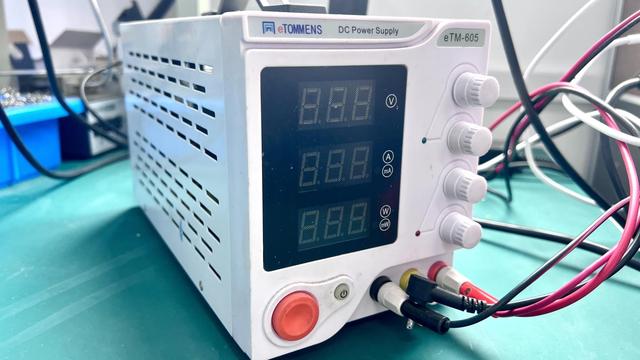
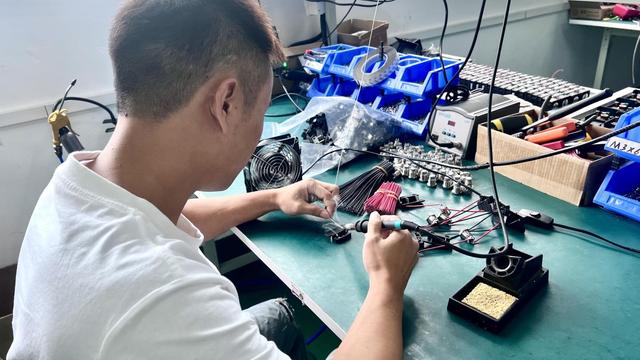
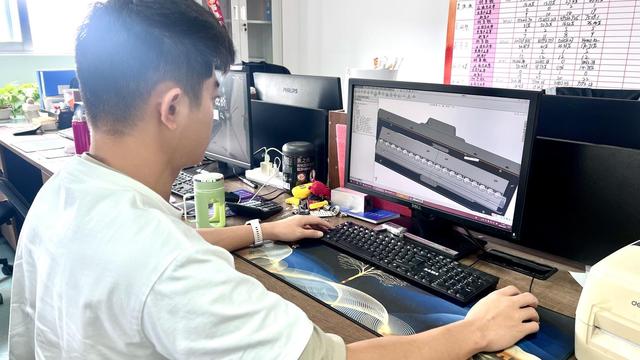
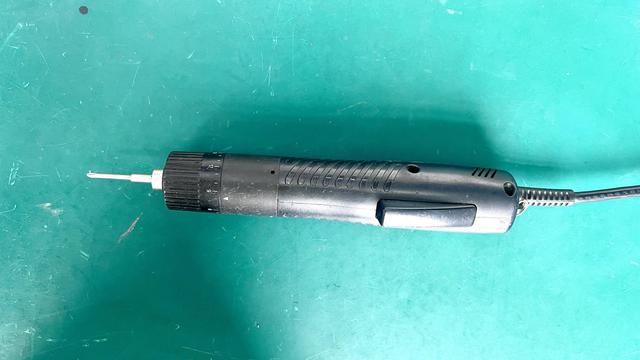
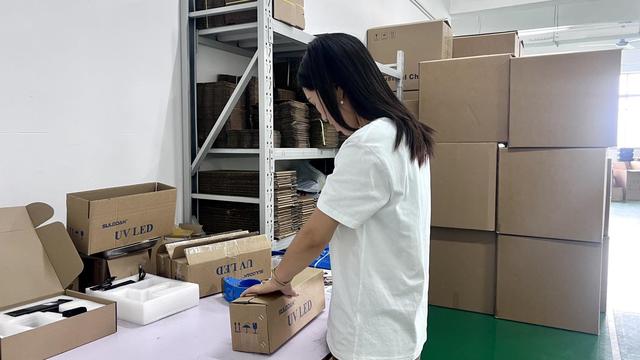
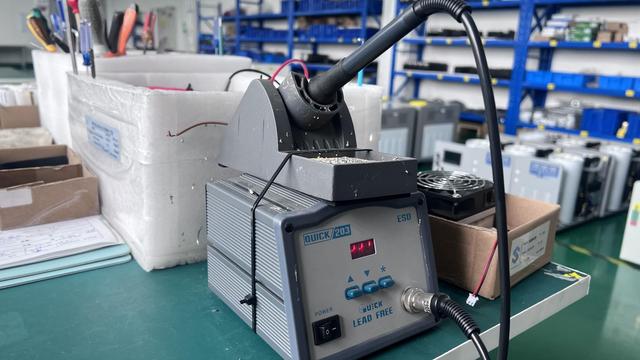
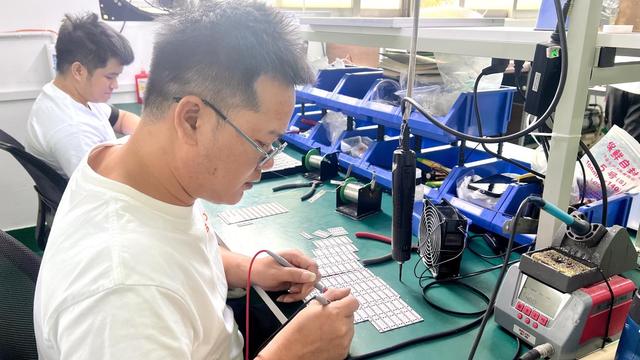
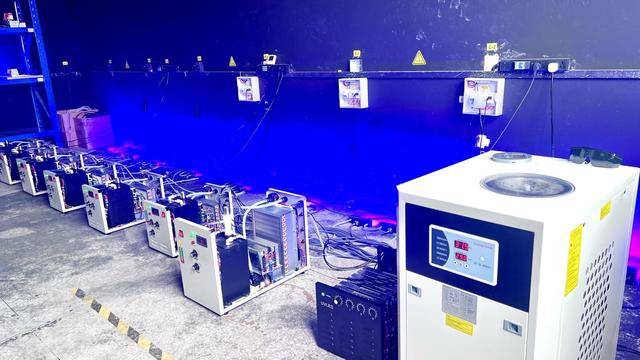
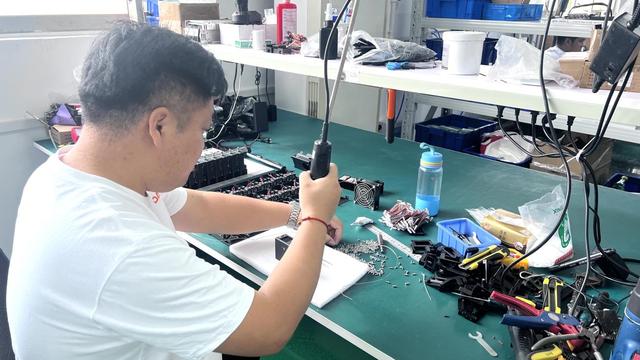
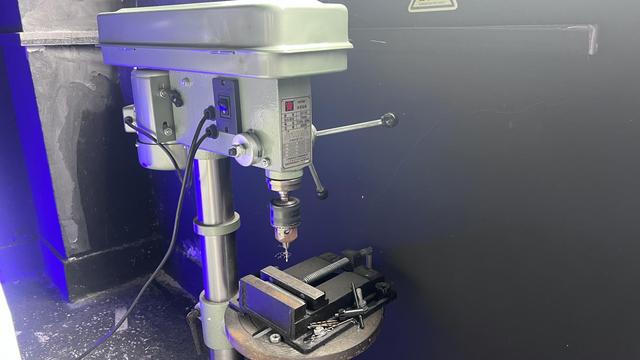
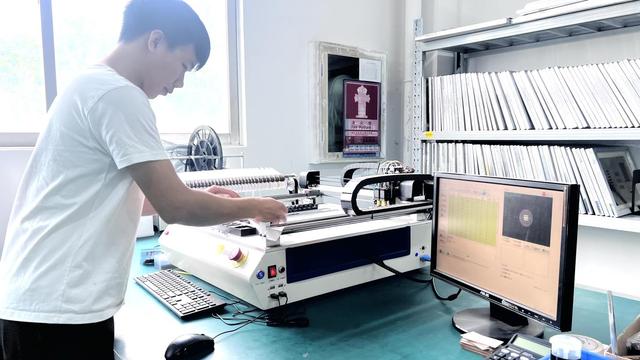
Advanced Manufacturing & QA Testing Facility

Direct glimpses inside Dongguan LumiCure's high-tech production floors and laboratories

Deep-Dive: Wavelength and Application Profiles

Selecting the right UV LED light source depends on matching the wavelength to the chemical requirements of your materials. Different industries use tailored combinations of wavelength, intensity, and cooling to get the best curing results:

1. High-Speed Sheet-fed Offset & Flexo Printing

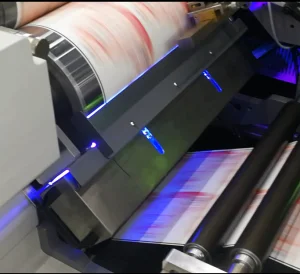
Modern printing presses run at speeds exceeding 300 meters per minute. Curing inks instantly at these speeds requires high-intensity UV LED systems (usually 385nm or 395nm). Using water-cooled LED bars ensures the light output remains stable during long runs. This setup prevents heat from building up on the rollers, keeps paper and plastic films flat, and stops ink from smearing or setting unevenly.

2. Semiconductor, Chip Packaging, and Microelectronics

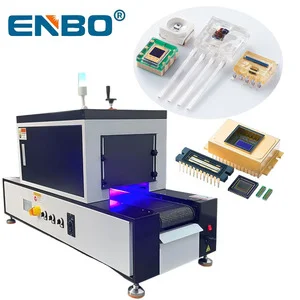
In semiconductor back-end processing, UV LEDs are critical for curing die-attach adhesives, underfill resins, and image-sensor assemblies. High-precision optical bonding relies on shadowless UV adhesives that cure under 365nm or 405nm light without causing thermal stress. Keeping heat low is essential here, as even minor temperature shifts can warp delicate silicon chips and microscopic wire bonds.

3. Architectural Direct-to-Wall and Signage Systems

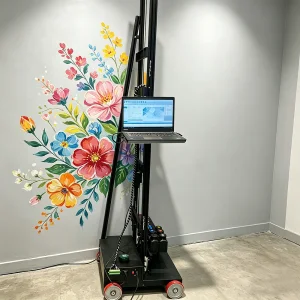
Portable printing equipment, such as vertical wall printers, needs compact, air-cooled UV LED systems to dry ink instantly on brick, plaster, metal, and glass. High-power 395nm air-cooled modules are perfect for this because they offer a great balance of lightweight design, high intensity, and reliable operation on outdoor jobsites.

4. UVB Phototherapy & Biosynthesis (290nm - 295nm)

Unlike UVA rays used for industrial curing, narrow-band UVB wavelengths (such as 293nm and 295nm) are utilized in biochemistry and medical devices. These wavelengths trigger specific chemical changes, like vitamin D3 synthesis in laboratory environments, or help evaluate how materials age and degrade under sunlight.

Global Buyer Sourcing & Design Guide

Procuring industrial-grade UV LED equipment requires looking beyond raw wattage to evaluate specific mechanical and optical parameters. Engineering and purchasing teams should focus on these key factors:

  • Peak Irradiance vs. Dose: Peak irradiance ($W/cm^2$) determines how well the system cures the surface layer. Total dose ($J/cm^2$) measures the energy delivered over time, which affects how thoroughly the cure penetrates the material. Always request cross-sectional curing profiles from your supplier.
  • Cooling Systems: Air cooling is simple and works well for compact systems. For high-intensity applications or enclosed production lines, water cooling is necessary. It keeps the diode junction temperatures low, preventing thermal runaway and extending the life of the chips.
  • Optics and Beam Shaping: Quartz lenses can focus the UV light into a narrow line for high-speed webs, or spread it out for wide, even flood curing. High-purity quartz lenses prevent light loss and resist degradation over long-term exposure to UV radiation.
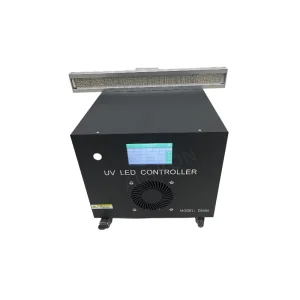
  • Control Integration: Look for modules that connect easily with external PLC systems. Key integration features include analog control inputs, RS485 communication, temperature safety sensors, and instant power adjustments from 0% to 100%.

Frequently Asked Questions

Technical answers to common questions about industrial UV LED systems

Why switch from mercury arc lamps to UV LED systems?
UV LEDs save up to 70% in energy costs, run much cooler to protect heat-sensitive materials, contain zero toxic mercury, turn on and off instantly without warm-up delays, and last more than ten times longer (over 20,000 hours compared to 1,500 hours for mercury bulbs).
What is the difference between 365nm and 395nm curing wavelengths?
365nm light delivers higher photon energy, making it ideal for curing surface coatings, clear lacquers, and optical adhesives. 395nm light penetrates deeper, making it better suited for curing thick, pigmented inks, screen prints, and heavy adhesive layers.
When should I choose water-cooled over air-cooled UV LED systems?
Choose water cooling for high-intensity curing systems (above 12 W/cm²) and when operating in hot, dusty, or enclosed environments. Air cooling is a better fit for compact, lower-intensity setups where keeping the equipment lightweight and easy to maintain is key.
Can I run multi-wavelength UV LEDs in a single system?
Yes, we can customize arrays using a mix of wavelengths (such as 365nm + 395nm or 385nm + 405nm). This approach allows you to achieve fast surface drying and deep, thorough curing at the same time.
How does LumiCure guarantee the quality of its custom OEM designs?
Every custom module goes through detailed thermal and optical simulations. We perform 72-hour continuous burn-in tests and check every unit with calibrated spectroradiometers to ensure accurate wavelength output and consistent light intensity before shipping.