High-irradiance, multi-wavelength, and precision-engineered solid-state curing equipment optimized for high-volume manufacturing lines.
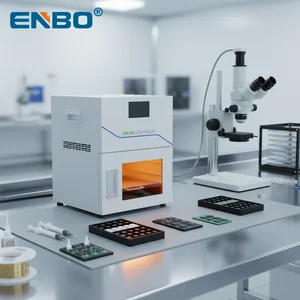
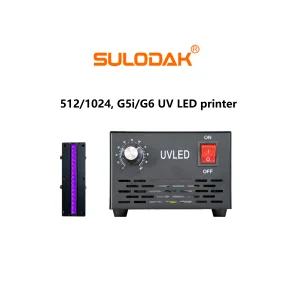
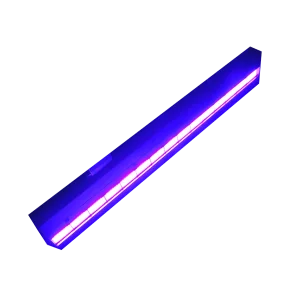
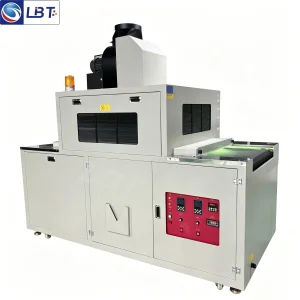
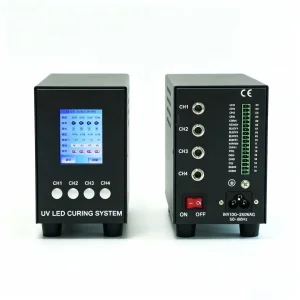
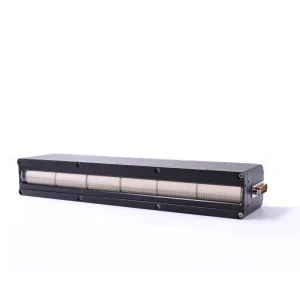
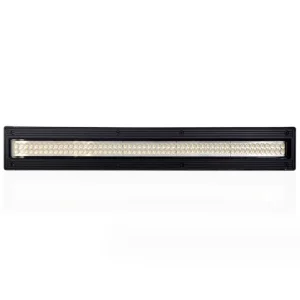
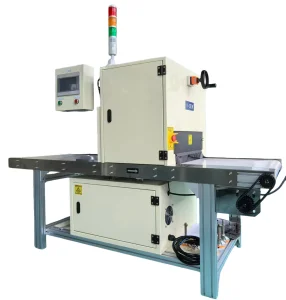
Navigating the transition from traditional mercury vapor systems to intelligent, solid-state UV LED technology.
In modern high-speed electronics assembly, semiconductor manufacturing, and packaging industries, the shift to UV LED advanced curing systems is no longer just an environmental option—it is a critical requirement for process repeatability, high throughput, and quality assurance. Global OEMs and industrial manufacturers face intense pressure to optimize yield rates while meeting strict ESG (Environmental, Social, and Governance) targets. Traditional gas-discharge UV lamps, with their high thermal radiation, ozone emissions, and long warm-up cycles, are increasingly obsolete.
Procuring advanced photopolymerization curing systems requires a complex evaluation of spectral match, optical irradiance, heat dissipation, and long-term stability. Enterprise procurement teams prioritize suppliers that offer customized optical configurations (such as custom Chip-on-Board, or COB, matrices) along with reliable thermal management (water-cooled vs. forced-air cooling) to ensure consistent curing performance across continuous manufacturing shifts.
Tailored industrial integration across key manufacturing sectors requiring precise photochemical reactions.
Sub-micron precision bonding processes, such as wafer dicing tape exposure, flip-chip underfill, die bonding, and wire bond reinforcement. Narrowband light output at 365nm prevents thermal damage to sensitive silicon structures.
Seamless integration with flexographic, offset, and inkjet digital presses. Rapid curing of UV inks at speeds exceeding 300 meters per minute, featuring instant-on/off capability and precise dimming control from 10% to 100%.
Reliable curing of shadowless adhesives, structural sealants, and optical adhesives in LiDAR, ADAS camera modules, display assembly, and key automotive sensors. Built to handle harsh, continuous-duty automotive assembly lines.
The UV LED curing sector is evolving beyond basic light emission. The next generation of systems leverages intelligent control, hybrid wavelength arrays, and advanced optoelectronic designs.
By replacing mercury-vapor lamps, manufacturers eliminate highly toxic waste materials and significantly reduce energy consumption. In addition, the low heat generated by UV LED systems allows for thinner, heat-sensitive polymer films to be used, opening up new opportunities in flexible electronics, bio-compatible medical device coatings, and light-weight sustainable packaging.
Dongguan LumiCure Light Co., Ltd. is a professional China UV LED curing lamp manufacturer specializing in the research, development, production, and supply of industrial UV curing systems and customized UV LED solutions. With a strong focus on innovation, quality, and customer satisfaction, LumiCure has become a trusted partner for manufacturers worldwide seeking efficient and reliable curing technologies.
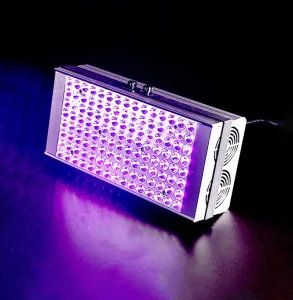
Our product range includes UV LED curing lamps, UV LED spot curing systems, flood curing lamps, conveyor UV curing machines, UV LED modules, printing curing systems, adhesive curing equipment, and customized industrial UV solutions. These products are widely applied in printing, electronics assembly, semiconductor packaging, optical bonding, automotive manufacturing, medical devices, 3D printing, and various precision industrial processes.
Backed by an experienced engineering team and advanced manufacturing facilities, LumiCure is committed to developing energy-saving and environmentally friendly UV curing technologies. Our products feature high curing efficiency, precise wavelength output, long service life, low maintenance requirements, and intelligent control capabilities, helping customers improve productivity while reducing operating costs.
Quality remains the foundation of our business. Every product undergoes rigorous testing and strict quality control procedures throughout the manufacturing process to ensure consistent performance and reliability. We also provide comprehensive OEM and ODM services, enabling customers to customize products according to their specific technical and application requirements.
Serving clients across Europe, North America, Asia, the Middle East, and other global markets, Dongguan LumiCure Light Co., Ltd. continues to deliver innovative UV LED curing solutions that support sustainable and efficient industrial manufacturing.
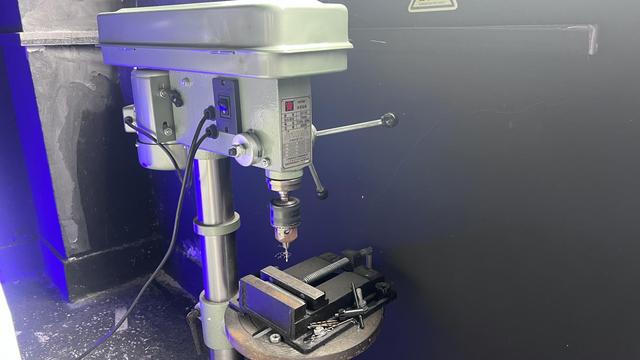
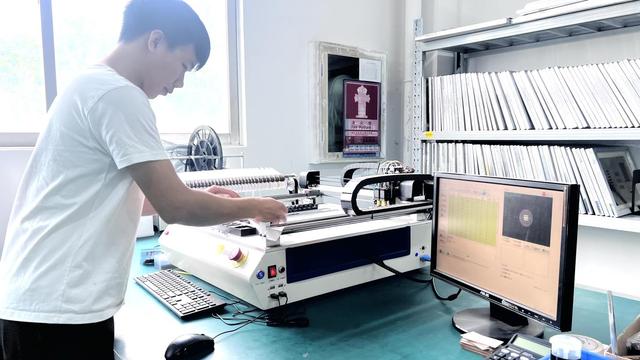
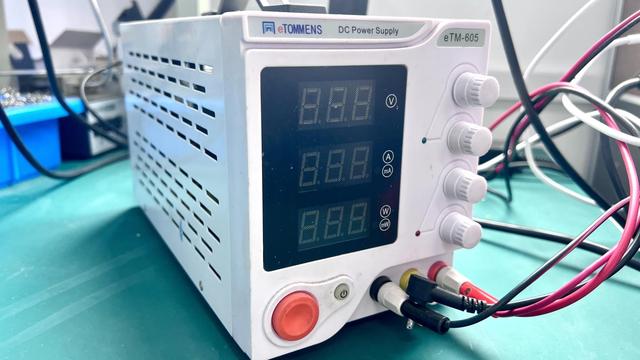
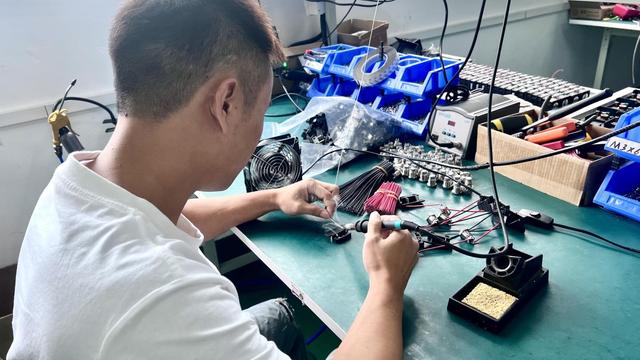
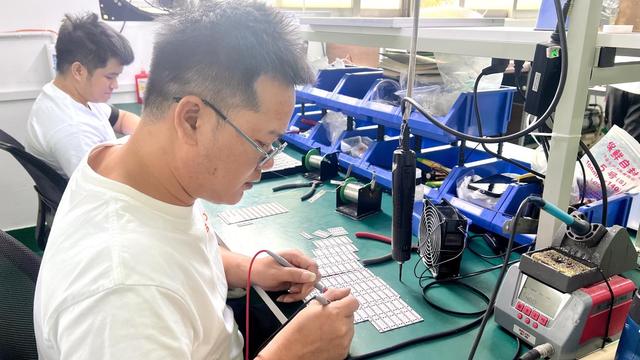
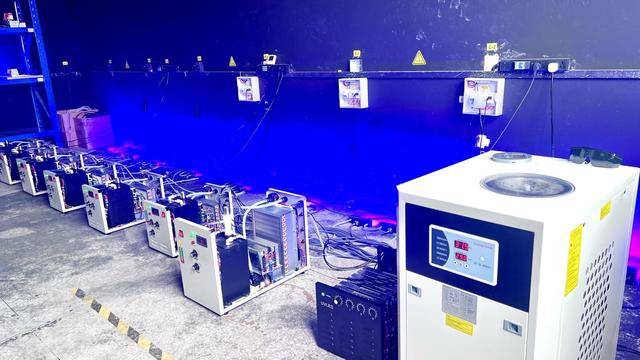
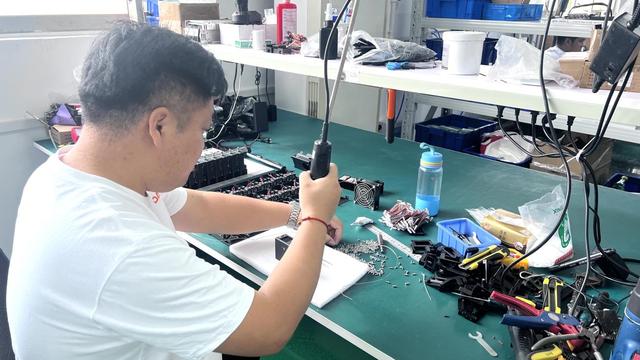
Ensuring seamless site integration, electrical compliance, and operational safety for overseas deployment.
Deploying advanced industrial optoelectronic systems into production environments in North America, Europe, or APAC requires strict adherence to international electrical, mechanical, and safety regulations. As an experienced global partner, Dongguan LumiCure Light Co., Ltd. ensures all customized and standard products comply with local requirements:
Expert answers to common engineering, process optimization, and procurement questions.
Peak Irradiance, measured in $W/cm^2$, refers to the maximum power of light concentrated on a specific surface area at a given distance. Energy Density, measured in $J/cm^2$ or $mJ/cm^2$, represents the total amount of light energy delivered over a period of time (Irradiance $\times$ Time). Peak Irradiance is critical for initiating the polymerization reaction and overcoming oxygen inhibition, while Energy Density ensures the reaction goes to completion for a full, deep cure.
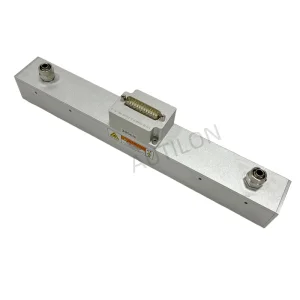
Although UV LED systems generate minimal heat toward the substrate compared to mercury lamps, they produce substantial thermal energy internally at the LED junction. Efficient heat dissipation is essential to prevent thermal degradation, maintain stable light output, and extend the lifespan of the diodes. Air-cooled systems use built-in fans and heat sinks, making them compact and easy to integrate for spot and low-power curing. Water-cooled systems use a closed-loop chiller to circulate coolant through the lamp head, which is necessary for high-power, continuous-duty industrial lines where cleanroom conditions or compact lamp sizes are required.
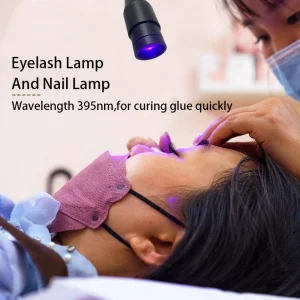
365nm is a shorter UV wavelength that is highly absorbed by the surface layers of clear adhesives, lacquers, and varnishes. It is excellent for fast surface curing and is widely used in semiconductor assembly and optical lens bonding. 395nm and 405nm wavelengths penetrate deeper into materials, making them ideal for curing thick adhesive layers, highly pigmented inks, and opaque materials where deep adhesion is required. Selecting the right wavelength depends on the absorption profile of the photoinitiator in your formulation.
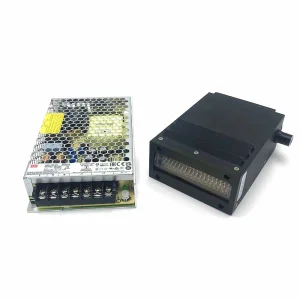
Yes, retrofitting is a common and cost-effective upgrade. Standard retrofit packages include custom mounting brackets, compact LED lamp heads that fit into existing housings, and external power supply controllers. Integrating the control signals with the parent machine's PLC allows for automated dimming and synchronized operation, resulting in significant energy savings and reducing line down-time.
Oxygen inhibition occurs when atmospheric oxygen reacts with free radicals in the formulation, causing a sticky or under-cured surface layer. This can be prevented by: (1) Increasing the peak irradiance of the UV LED to rapidly consume the oxygen in the curing zone. (2) Using a nitrogen purging system to create an inert gas barrier over the surface during exposure. (3) Adjusting the photoinitiator formulation to better align with the narrow UV LED emission spectrum.
We use high-grade semiconductor LED chips and maintain strict manufacturing controls. Every custom module undergoes thermal imaging analysis, optical beam profiling, and a continuous 72-hour burn-in and calibration test. This ensures uniform power output across the entire curing area, prevents hot spots, and guarantees reliable operation once integrated into your production line.
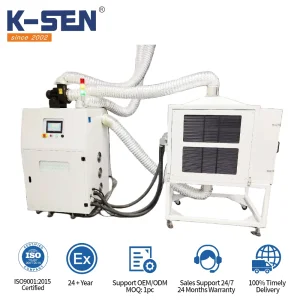
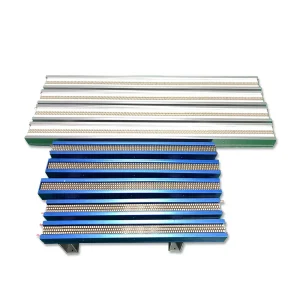
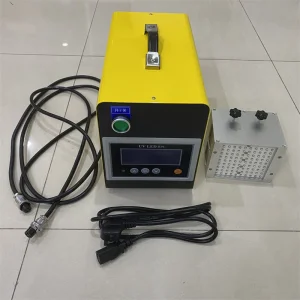
Heavy-duty drying systems, portable light sources, and customized solutions for high-performance manufacturing.
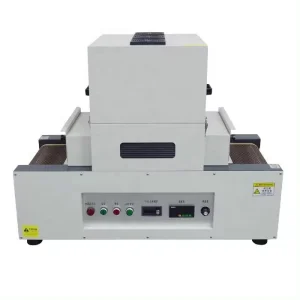
 LumiCure Light