Engineered for high radiant flux density, peak spectral stability, and seamless industrial automation integration.
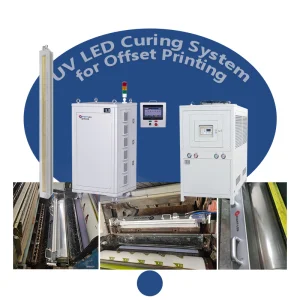
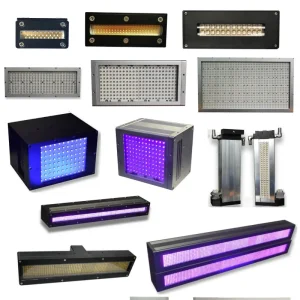
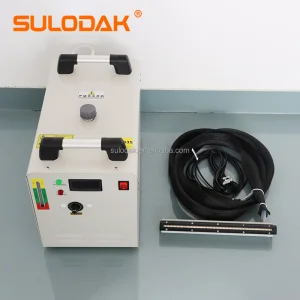
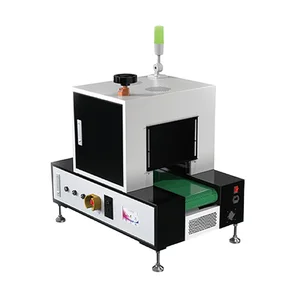
Quantifying the paradigm transition from traditional mercury vapor lamps to high-irradiance solid-state UV LED array technology.
The global industrial curing sector is experiencing a structural revolution. Global environmental mandates, such as the Minamata Convention on Mercury, coupled with corporate decarbonization commitments, are accelerating the transition from broad-spectrum medium-pressure mercury arc lamps to narrow-band semiconductor UV LED curing systems. This technological evolution extends beyond compliance; it redefines operational economics, photochemical yield precision, and thermal stress control in ultra-sensitive manufacturing processes.
High-performance UV LED Curing Performance Analysis Factories evaluate semiconductor emitters not merely by total electrical wattage, but by radiometric irradiance ($W/cm^2$), accumulated energy dosage ($J/cm^2$), optical divergence angles, and junction thermal management ($T_j$). Modern precision industries—ranging from semiconductor wafer packaging to high-speed offset printing and medical micro-catheter assembly—demand monochromatic emission stability within narrow band tolerances ($\pm 2nm$ or $\pm 5nm$).
Engineering parameters that define modern industrial curing efficiency, thermal management integrity, and photopolymer crosslinking depth.
Peak Irradiance ($mW/cm^2$ or $W/cm^2$) dictates surface cure kinetics and oxygen inhibition overcoming, while Energy Dose ($mJ/cm^2$) controls bulk polymerization depth. High-end factory testing measures radiant flux at variable working distances ($WD=1mm$ to $100mm$) using calibrated spectroradiometers.
Narrowband wavelengths (365nm, 385nm, 395nm, 405nm) match specific photoinitiator absorption spectra (such as TPO, BAPO, or Irgacure 184). Precision optical filters eliminate infrared (IR) heat, enabling thermal-sensitive substrate processing without deformation.
LED output intensity drops exponentially as junction temperature ($T_j$) rises. Advanced manufacturers implement micro-channel copper liquid cold plates or copper heat-pipe forced-air systems to maintain $T_j \le 65^\circ C$, ensuring steady output across continuous 24/7 duty cycles.
| Performance Metric | Industrial UV LED Curing Array | Traditional Mercury Vapor Lamp | Engineering Advantage |
|---|---|---|---|
| Spectral Output | Narrowband Monochromatic (365/385/395/405 nm) | Broadband Polychromatic (200 nm – 450 nm + High IR) | Zero substrate thermal damage; higher energy conversion |
| Energy Consumption | Instant On/Off Duty Cycle; Low Power Input | Continuous Warm-up/Standby Power draw | 60% – 75% reduction in electrical power bills |
| Irradiance Degradation | < 5% degradation after 5,000 continuous hours | 50% decay within 1,000 – 1,500 operating hours | Consistent curing process window, minimal downtime |
| Heat Generation on Substrate | Minimal (Cold light source, IR suppressed) | Extreme Substrate Heating (Requires quartz plates) | Compatible with thin films, foil, and plastics |
| Environmental Compliance | 100% Ozone Free, Mercury Free (RoHS/REACH) | Produces Ozone gas; hazardous mercury disposal | Eliminates costly exhaust ventilation systems |
Deployment scenarios across semiconductor, packaging, optical manufacturing, and medical technology sectors.
Used for die bonding, wafer dicing tape UV release, and wire bond encapsulation protection. Demands extreme parallel optical beam uniformity ($\ge 85\%$) and precise multi-wave (365nm/385nm) emission profile to prevent silicon thermal stress.
Applied in offset screen printing, spot UV varnishing, and flexible packaging printing lines. Water-cooled 395nm modules ensure instantaneous UV ink polymer crosslinking at line speeds exceeding 300 meters per minute.
Critical for HUD display bonding, lens-to-barrel adhesive fixing, and PVD clear-coat curing on decorative auto parts. Provides sub-second tack-free curing with zero optical haze generation.
Why Dongguan and Pearl River Delta manufacturing hubs dominate global UV LED curing technology engineering.
China’s UV LED manufacturing ecosystem—centered in technological hubs like Dongguan—offers unparalleled advantages in vertical integration. Factories in this region control the entire component chain: high-power ceramic LED packaging, optical quartz lens molding, CNC micro-channel cold plate machining, and digital constant-current driver software design.
This complete supply chain integration grants global procurement officers three vital advantages:
Available Custom Dimensions: 10mm × 10mm up to 2000mm × 500mm active area
Wavelength Mix Ratios: Single-band (395nm) or Dual-band combinations (365nm + 395nm hybrid)
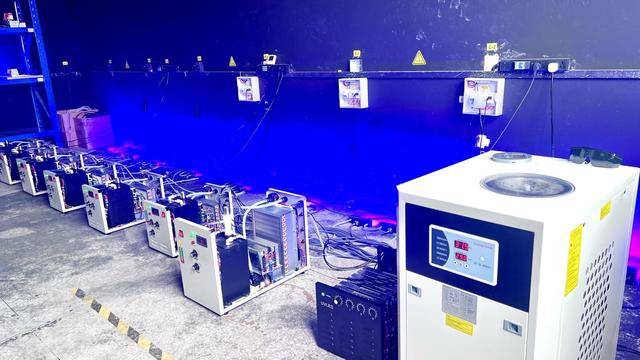
Cooling Topology: Forced air convection vs Water-cooled micro-channel internal loops
Control Protocols: RS485, PLC I/O, Wireless RDM, Touchscreen HMI panel integration
A trusted China UV LED curing lamp manufacturer driving technical advancement across worldwide automation markets.
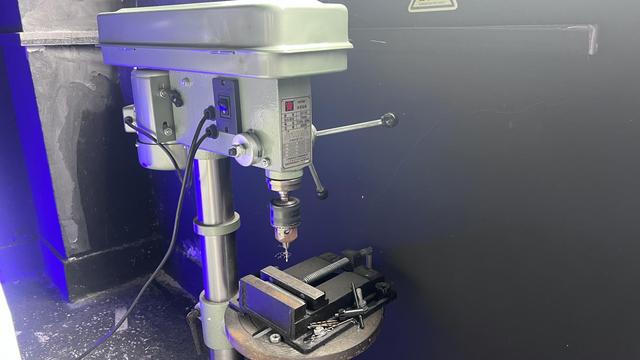
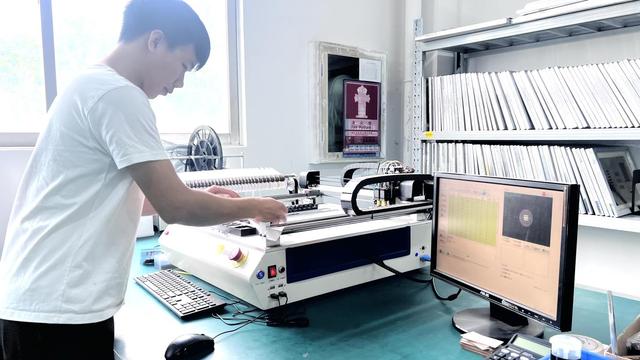
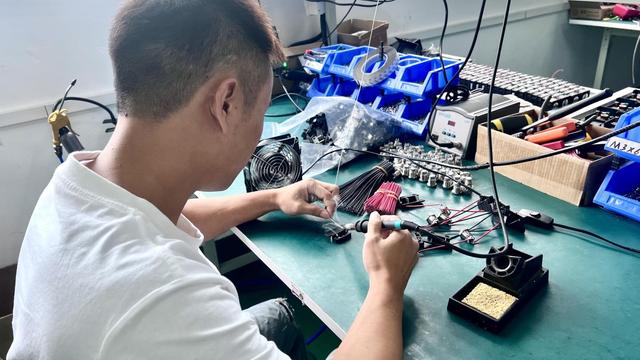
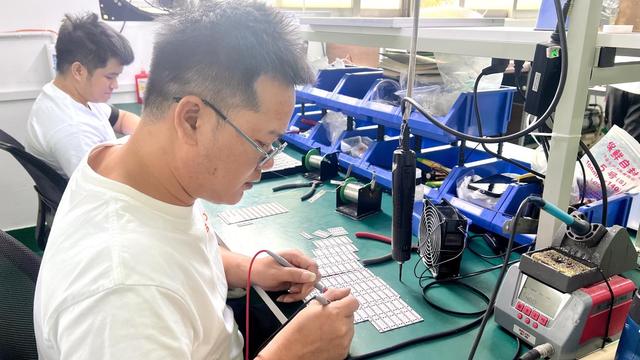
Dongguan LumiCure Light Co., Ltd. is a professional China UV LED curing lamp manufacturer specializing in the research, development, production, and supply of industrial UV curing systems and customized UV LED solutions. With a strong focus on innovation, quality, and customer satisfaction, LumiCure has become a trusted partner for manufacturers worldwide seeking efficient and reliable curing technologies.
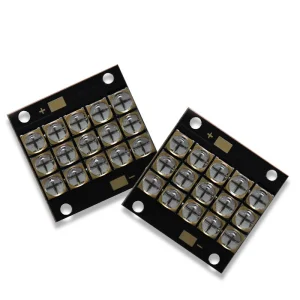
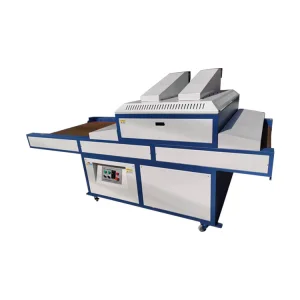
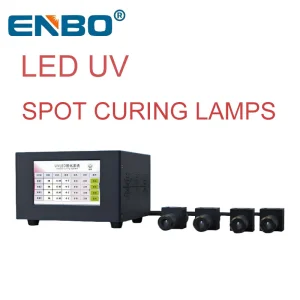
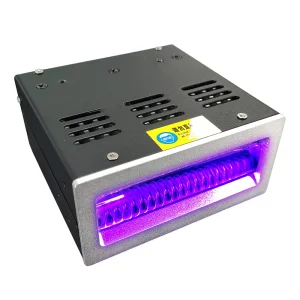
Our product range includes UV LED curing lamps, UV LED spot curing systems, flood curing lamps, conveyor UV curing machines, UV LED modules, printing curing systems, adhesive curing equipment, and customized industrial UV solutions. These products are widely applied in printing, electronics assembly, semiconductor packaging, optical bonding, automotive manufacturing, medical devices, 3D printing, and various precision industrial processes.
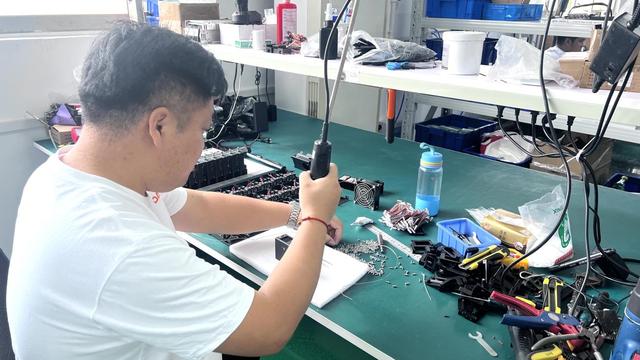
Backed by an experienced engineering team and advanced manufacturing facilities, LumiCure is committed to developing energy-saving and environmentally friendly UV curing technologies. Our products feature high curing efficiency, precise wavelength output, long service life, low maintenance requirements, and intelligent control capabilities, helping customers improve productivity while reducing operating costs.
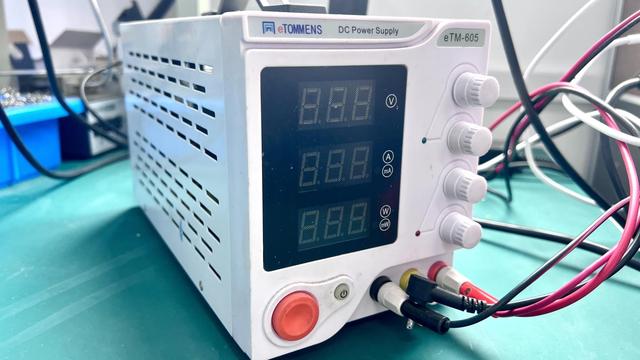
Quality remains the foundation of our business. Every product undergoes rigorous testing and strict quality control procedures throughout the manufacturing process to ensure consistent performance and reliability. We also provide comprehensive OEM and ODM services, enabling customers to customize products according to their specific technical and application requirements.
Serving clients across Europe, North America, Asia, the Middle East, and other global markets, Dongguan LumiCure Light Co., Ltd. continues to deliver innovative UV LED curing solutions that support sustainable and efficient industrial manufacturing.
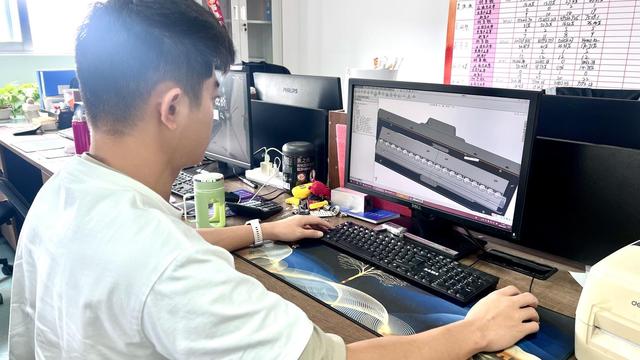
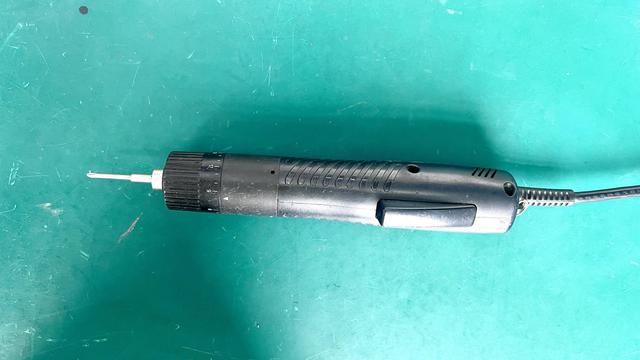
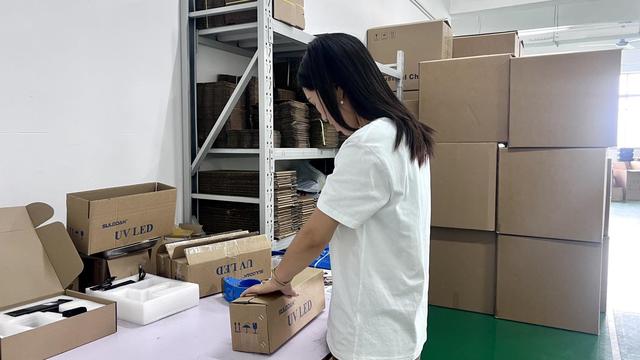
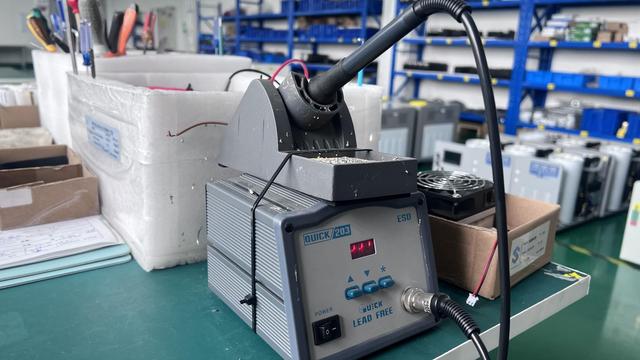
Key technical evaluation criteria for selecting reliable high-irradiance UV LED system manufacturers.
Ensure the supplier provides spectroradiometer reports validating spectral half-width ($FWHM \le 12nm$). Request proof of micro-watt consistency across all emitter dies within the array.
For high-power arrays (>12 W/cm²), evaluate whether water cooling channels feature anti-corrosion anodization or pure nickel-plated copper paths to prevent oxidation clogging over time.
Verify integration support for automated assembly lines via MODBUS, PROFINET, or 0-10V analog intensity signals. Thermal safety interlocks must instantly cut power if flow drops or temp exceeds thresholds.
The roadmap toward dynamic wavelength switching, smart AI irradiance monitoring, and deep-UV micro-arrays.
Future curing arrays incorporate dual or triple-chip configurations (e.g., 365nm + 395nm within a single optic package). This allows engineers to independently adjust surface tackiness curing and deep layer crosslinking density via digital control software.
Integrated photo-sensors inside the curing head provide real-time radiant intensity telemetry directly to the digital driver board. The driver automatically boosts forward current ($I_f$) to compensate for natural LED thermal decay over thousands of operational hours.
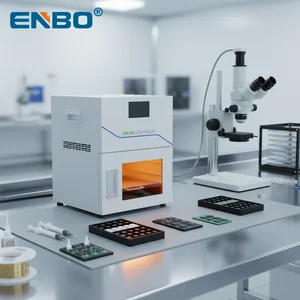
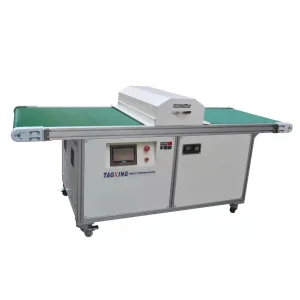
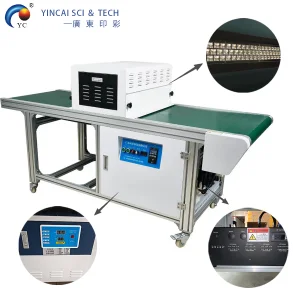
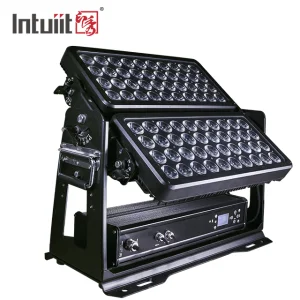
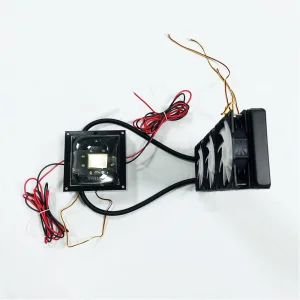
High-power spot lamps, industrial flood lights, and fully automated roller conveyor systems.
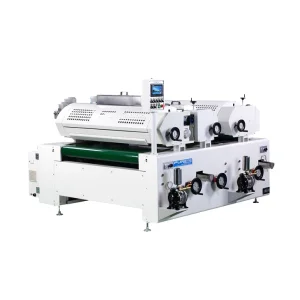
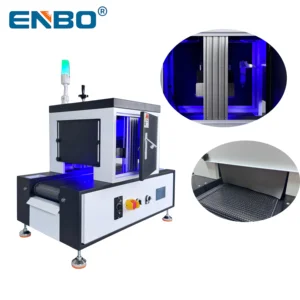
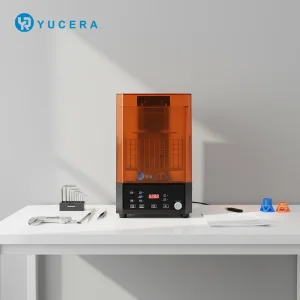
In-depth engineering answers covering peak irradiance calculations, optical degradation, and customization options.
 LumiCure Light